
Unsolved Soviet-Era Crimes That Still Puzzle Investigators
The Archive of the Unresolved
The Soviet Union's official crime statistics painted a picture of orderly socialist society. Homicide rates were classified; investigative failures were buried in ministerial files. When cases went cold, they disappeared from public discourse entirely. No press coverage, no vigils, no family appeals on television.
Yet the crimes themselves did not vanish. Archived case files, witness testimonies, and forensic evidence survived the USSR's collapse in 1991. Today, investigators in Russia, Ukraine, and the Baltic states still work these frozen cases, armed with DNA databases and digital tools the original detectives never possessed.
Some cases have become legends. Others are known only to archivists and surviving family members. All share a common thread: the passage of time has not diminished the questions they raise.
The Vitebsk Strangler (1971–1985)
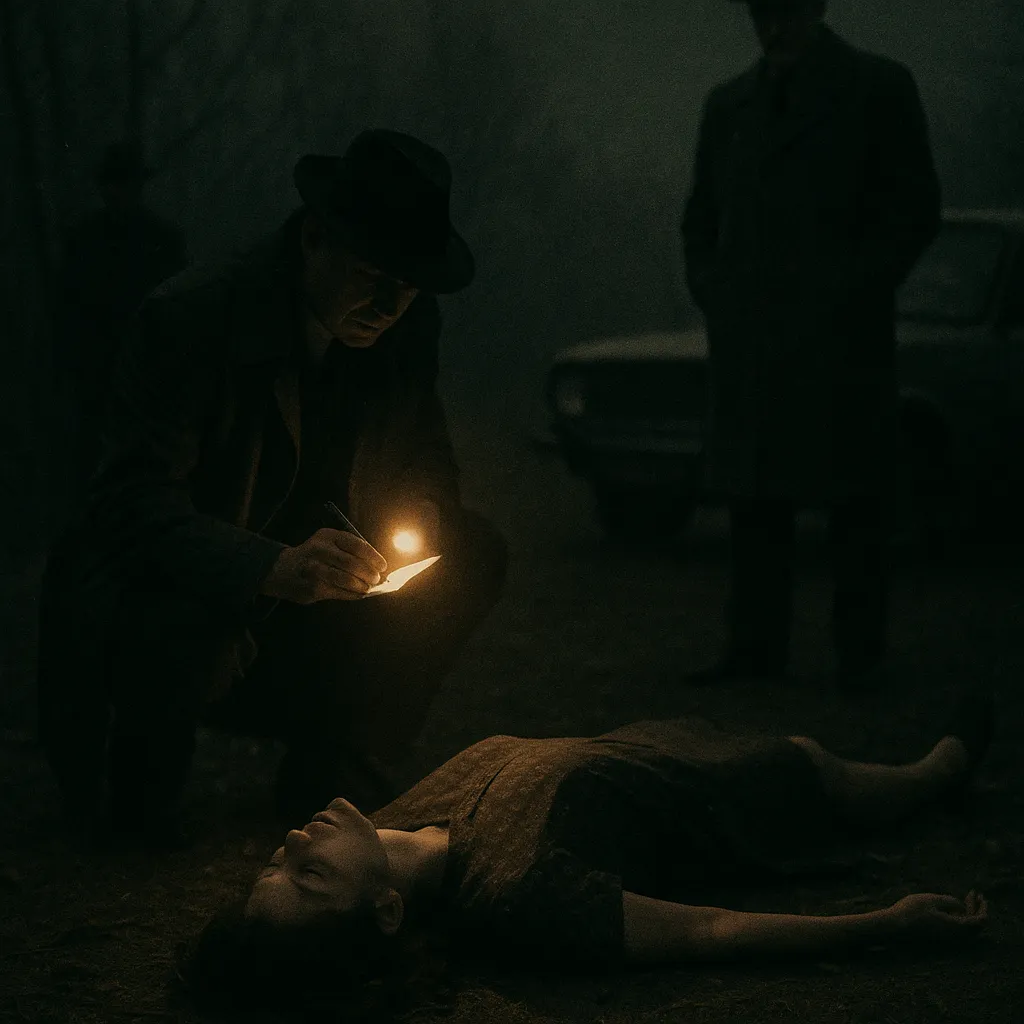
Between 1971 and 1985, at least thirty-six women were murdered in and around Vitebsk, a city in what is now Belarus. The victims were strangled, often near railway stations or bus depots. Bodies were found in wooded areas, half-buried or concealed under brush.
The Soviet MVD (Ministry of Internal Affairs) assigned multiple task forces to the case over fourteen years. Hundreds of men were questioned. Several confessed under interrogation, then recanted. No physical evidence definitively linked any suspect to more than one crime scene.
In 1985, the killings stopped. No arrest was ever made public. Theories proliferated: the killer had died, been imprisoned for an unrelated offense, or moved beyond Soviet borders. Forensic technology of the era could not distinguish between suspects based on biological evidence alone.
Post-Soviet investigators reopened the file in 2003. They found inconsistencies in the original victim count—some murders attributed to the "strangler" may have been domestic homicides or unrelated attacks. Others were never properly investigated. The case remains unsolved.
The Disappearance of Lyudmila Dubinina's Diary (1959)
The Dyatlov Pass incident is widely known: nine hikers died under mysterious circumstances in the Ural Mountains in February 1959. Less discussed is a detail from the investigation—Lyudmila Dubinina, one of the victims, kept a personal diary during the expedition.
Investigators documented its existence in initial reports. The diary was photographed as evidence, then transferred to a regional archive. By the time the case was reopened in the 1990s, the diary had vanished. Archive logs showed no record of its removal or destruction.
Without the diary, researchers lost a potential window into the group's final days. Dubinina's handwritten observations might have clarified timeline disputes, interpersonal tensions, or environmental hazards the group encountered. Its disappearance—whether bureaucratic error or deliberate suppression—remains unexplained.
The Norilsk Child Murders (1978–1982)
Norilsk, a nickel-mining city inside the Arctic Circle, was a closed administrative zone during the Soviet period. Between 1978 and 1982, seven children aged eight to fourteen were found murdered. The victims were strangled or bludgeoned; bodies were discovered in industrial areas, mine shafts, or abandoned warehouses.
The closed nature of Norilsk meant a finite suspect pool—only residents with internal passports could live there. Investigators screened thousands of workers, including Gulag labor camp veterans who had settled in the city after release.
No charges were filed. In 1983, a directive from Moscow ordered the case suspended. Records suggest the investigation was halted not for lack of leads, but for political reasons—authorities feared the publicity would damage Norilsk's reputation as a model Soviet industrial city.
The files were declassified in 2007. Surviving evidence includes witness statements, autopsy photographs, and a suspect list with thirty-four names. None of the named individuals were conclusively eliminated. Most are now deceased.
The Phantom of Gorky Park (1976–1977)
In 1976 and 1977, four young women were attacked while walking alone in Moscow's Gorky Park (now Maxim Gorky Park) after dark. Three survived; one died from blunt force trauma to the skull. The attacker was never seen clearly—descriptions varied from "tall, dark coat" to "medium build, wool hat."
Moscow Militia deployed undercover officers in the park for eight months. The attacks stopped in late 1977. No suspect was apprehended.
Decades later, a former investigator claimed the suspect was identified—a low-level Party official whose name was protected by superiors. The claim has never been substantiated with documentary evidence. The official file lists the case as unsolved.
The Tallinn Flat Fires (1980–1981)
Between November 1980 and March 1981, nine residential fires broke out in central Tallinn, Estonia. Seven people died. Forensic analysis determined the fires were set deliberately using gasoline-soaked cloth.
The pattern was precise: fires were started in communal hallways of Soviet-era apartment blocks, always between 2:00 and 4:00 a.m., always on weekends. Witnesses reported seeing a lone figure leaving the buildings shortly before smoke was detected, but no composite sketch was ever released.
The KGB took over the investigation in February 1981, citing "national security concerns." The fires ceased immediately afterward. No public explanation was given. Estonian police theorize the arsonist was either arrested quietly or was himself a state security operative whose actions were covered up.
The case file was transferred to Estonian authorities after independence in 1991. Key documents—including interrogation transcripts and KGB surveillance logs—are missing.
The Irkutsk Schoolgirl Case (1983)
On May 12, 1983, fourteen-year-old Valentina Sergeeva disappeared while walking home from school in Irkutsk, Siberia. Her body was found six days later in a forest outside the city. She had been strangled. Her school uniform was torn; personal belongings were scattered nearby.
The case attracted intense local attention. Investigators conducted house-to-house searches, interviewed over two hundred people, and brought in tracker dogs. A suspect—a known petty criminal—was arrested and held for three weeks, then released without charge.
No further progress was made. The file was officially closed in 1988 as "unsolved." In 2005, a journalist obtained portions of the case file through a freedom-of-information request. Documents revealed that forensic evidence—including fabric fibers and soil samples—was never properly analyzed due to lack of laboratory capacity.
Valentina's mother campaigned for the case to be reopened. She died in 2011. The case remains inactive.
Why Soviet Cases Resist Resolution
Soviet-era cold cases face unique obstacles. Investigative records were often incomplete or falsified to meet bureaucratic quotas. Physical evidence was stored haphazardly; biological samples degraded without refrigeration. Witnesses have died or emigrated. Suspect lists were compiled based on ideology as much as evidence—"anti-social elements" and ex-convicts were questioned reflexively, regardless of actual connection to the crime.
Political interference was routine. Cases that embarrassed the Party or threatened production targets were suppressed. Investigators who pressed too hard were reassigned.
Post-Soviet police inherited these files along with the structural dysfunction that created them. Budget constraints, personnel shortages, and institutional mistrust limit what can be achieved. DNA databases exist, but samples from the 1970s and 1980s are rare and often contaminated.
Modern Efforts and Limitations
Since 2010, several post-Soviet states have established cold case units. Russia's Investigative Committee maintains a database of unsolved homicides dating to 1970. Ukraine and Belarus have similar initiatives, though resources vary.
Forensic genealogy—the technique that solved California's Golden State Killer case—is not widely used in the former USSR. Privacy laws restrict access to genetic databases; public participation in genealogy websites is lower than in Western Europe or North America.
Some families have taken matters into their own hands. Online forums and social media groups dedicated to Soviet cold cases have emerged, where amateur researchers share archival documents, compare theories, and pressure authorities to act.
Progress is sporadic. In 2018, Russian investigators announced they had identified a suspect in a 1979 murder using DNA evidence. The suspect had died in 1994. The family received closure, but no trial was possible.
The Weight of Silence
These cases matter beyond their individual tragedies. They represent a reckoning with the Soviet state's relationship to truth. Each unsolved murder is a reminder that political expedience once trumped justice, that victims were rendered invisible when their stories became inconvenient.
For the families still waiting, the passage of decades has not erased the need for answers. The files remain open. The questions endure.