
Train 124, Car 8, Seat 23: The Vanishing Passenger
The Empty Compartment
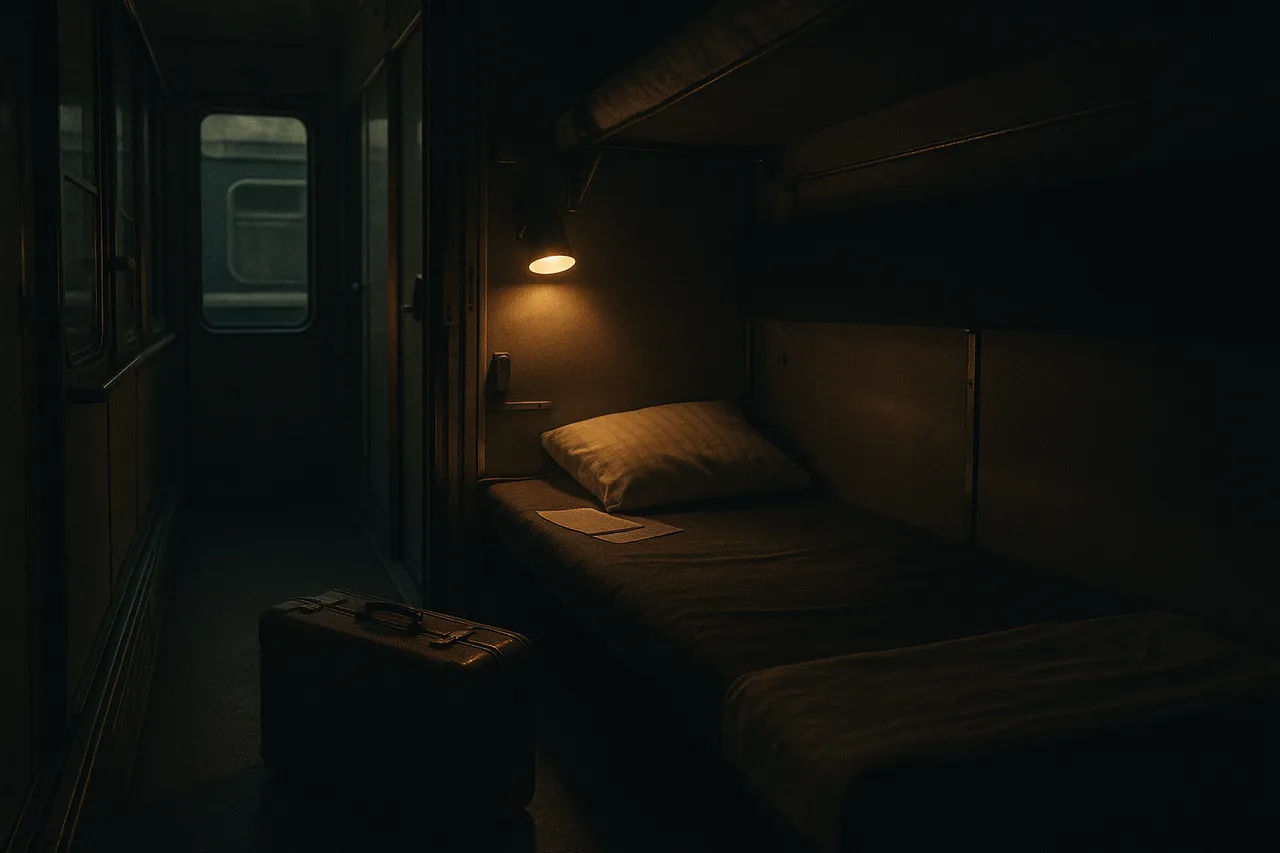
Novosibirsk-Glavny station, late June 1998. The Trans-Siberian Railway hummed with its usual traffic—business travelers, families, traders hauling goods between Siberia and the capital. Train 124 to Moscow departed on schedule. Among the passengers: a man in his mid-thirties, traveling alone, second-class sleeper, car 8, compartment 23.
The conductor checked his ticket at departure. Valid. Passport in order. A single suitcase, medium-sized, placed on the upper bunk. The man settled in, pulled the curtain. Nothing unusual.
By morning, approaching the Urals, the conductor returned to prepare passengers for the breakfast service. Compartment 23 was empty. Not empty as in vacated—empty as in abandoned mid-journey. The ticket lay on the small fold-down table. The suitcase remained on the upper bunk, still latched. The passenger's internal passport sat inside the suitcase, along with clothing, toiletries, a paperback novel with a bookmark at page forty-seven.
No one had seen him leave. No station stop between Novosibirsk and the current position had recorded a disembarkation. The train had made regulation halts—Barabinsk, Omsk, Ishim—but conductors at each car reported full passenger counts at every stop. The man had not gotten off.
He had simply ceased to be aboard.
The Investigative Problem
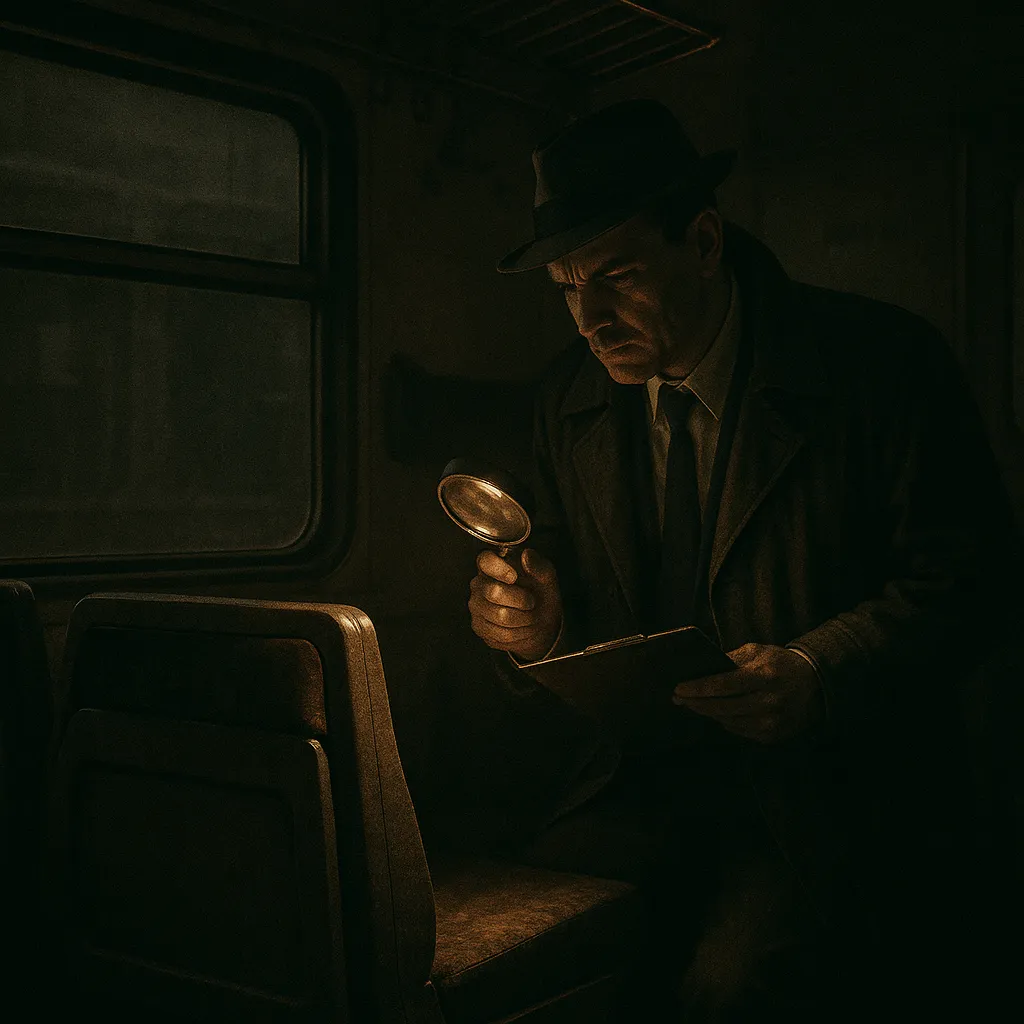
Disappearances from moving trains occupy a narrow, unsettling category in criminal investigation. Unlike cases where a body is found and cause of death is disputed, or where a person vanishes from a fixed location, a train offers both motion and enclosure. Evidence is not left behind—it travels with you, or it is already gone, scattered across hundreds of kilometers of track.
Soviet and post-Soviet rail police encountered such cases periodically. Some were suicides—passengers who opened vestibule doors between cars and stepped into the darkness. Others were accidents, drunken falls from open windows or platforms. A few were homicides: bodies discovered in luggage racks, in toilets, in the space beneath carriages at terminus stations. But vanishings without remains were rare. They posed a singular problem: absent a body, how do you prove a crime occurred?
In 1998, Russia's investigative apparatus was in flux. The Procuracy still held broad powers, but resources were stretched. Regional police handled most rail incidents. Forensic capabilities varied by oblast. In cases without immediate evidence of foul play—no blood, no struggle, no witness to violence—investigations could stall quickly. Passengers disembarked, dispersed. Train cars were cleaned, returned to service. The window for evidence collection was narrow.
For the detective assigned to Train 124, the questions were procedural and existential both: Did the man leave the train unobserved, or did he never leave at all? If he remained aboard in some hidden capacity, where? If he departed, when and how? And if neither—what happened in compartment 23 between departure and dawn?
The 1990s Railway Context
The late Soviet and early post-Soviet railway system was a world unto itself. Trains were not merely transport—they were temporary societies, microcosms of the larger instability outside. In June 1998, Russia was eight months from the August financial crisis. The ruble was weakening. Organized crime had penetrated transport networks. Contraband moved by rail—cigarettes, alcohol, metals, sometimes people.
Passenger trains were simultaneously public and anonymous. A second-class sleeper compartment held four bunks, often shared by strangers. Conversations happened or did not. Doors locked from the inside, but conductors held master keys. Vestibules between cars were unmonitored. At night, the train was a sequence of lit windows moving through darkness, each compartment its own sealed environment.
Cases of theft were common—luggage rifled while passengers slept, documents stolen, valuables taken from overhead racks. Violence was rarer but not unknown. In 1997, a passenger was stabbed in a dispute over a card game on the Moscow-Vladivostok route. In 1996, a woman's body was found in a freight car coupled to a passenger train in Krasnoyarsk. The railway police logged incidents, but clearance rates were low. Trains did not wait for investigations to conclude.
For investigators, the challenge was reconstructing events inside a moving, self-contained space after that space had emptied and moved on. Witnesses were transient. Physical evidence was contaminated by subsequent passengers or obliterated by cleaning crews. The train itself—the scene of the crime—was already departing for the next journey.
What CrimeFile Players Face
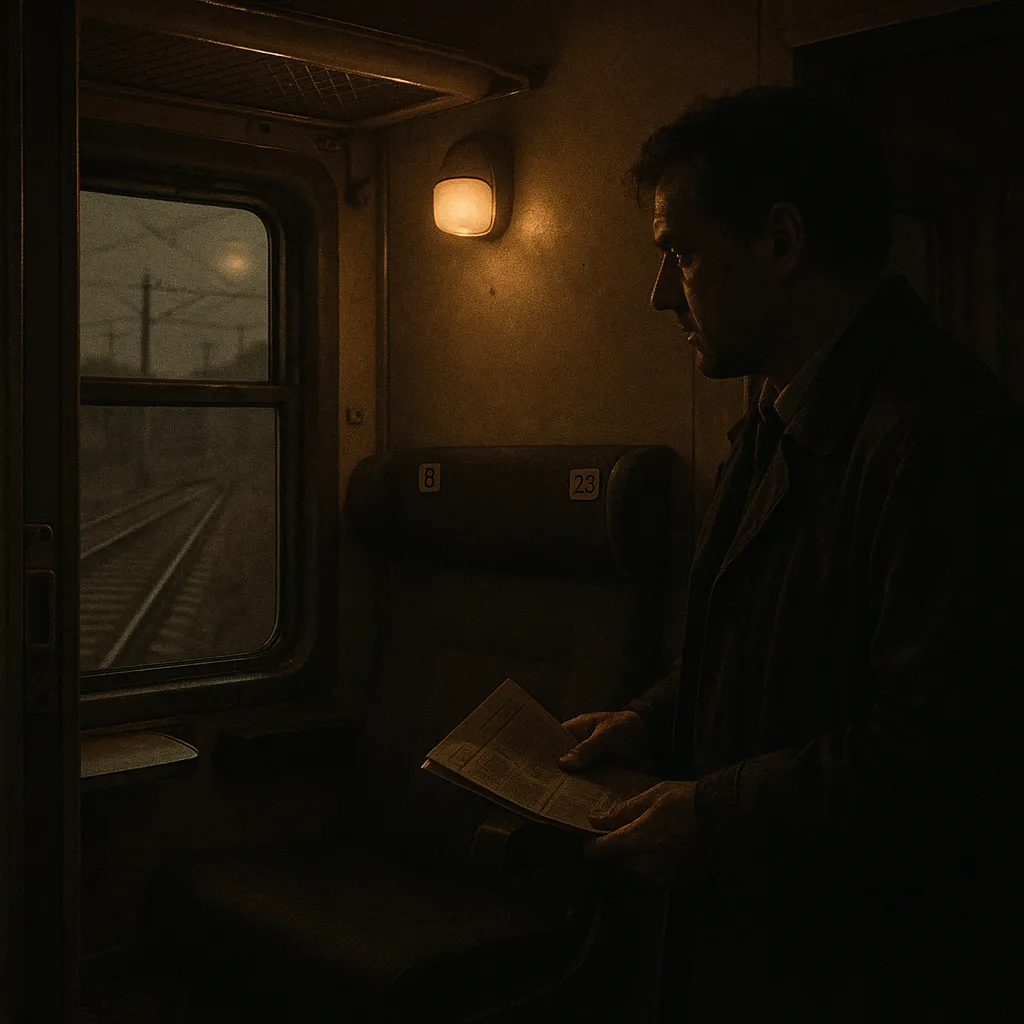
CrimeFile episode 104, Train 124, Car 8, Seat 23, places players in the role of the investigator tasked with resolving the disappearance. The file includes the conductor's testimony, passenger manifests, station logs, and the contents of the abandoned suitcase. Forensic reports are partial—this is 1998, rural Russia, resources are limited. Some evidence is physical: the state of the compartment, the position of objects, what was taken and what was left. Other evidence is testimonial: who saw what, when, and whether their accounts align.
The investigation requires players to think spatially and temporally. A train is not a static crime scene. It is a timeline, a sequence of stations, a progression of possible actions. Every stop is a potential exit point. Every hour of travel is a window during which something could have occurred unobserved. The absence of a body does not mean the absence of a crime—it means the crime, if it occurred, was executed with care or concealment.
Players must consider multiple hypotheses. Voluntary disappearance: did the man stage his own vanishing, and if so, why leave his documents? Accident: could he have fallen from the train, and if so, where is the physical evidence of an open door or window? Foul play: if he was killed or abducted, where is the body, and how was it removed from a moving train without witnesses?
The case is solvable, but it requires methodical examination of the file, cross-referencing testimonies, and recognizing what is significant in what was left behind. The truth is in the details—the details of a compartment that was occupied, then empty, with no one seen leaving and nothing visibly disturbed.
The Question That Remains
Train 124 arrived in Moscow on schedule. Compartment 23's passenger never claimed his luggage. His name appeared on no subsequent passenger manifests, no hotel registries, no hospital admissions. The suitcase and documents were logged as unclaimed property. The case was filed, unresolved.
Somewhere between Novosibirsk and the Urals, a man ceased to exist in documented space. Whether he chose that disappearance, or whether it was chosen for him, is the question the file holds. The train moved on. The rails remember nothing.