
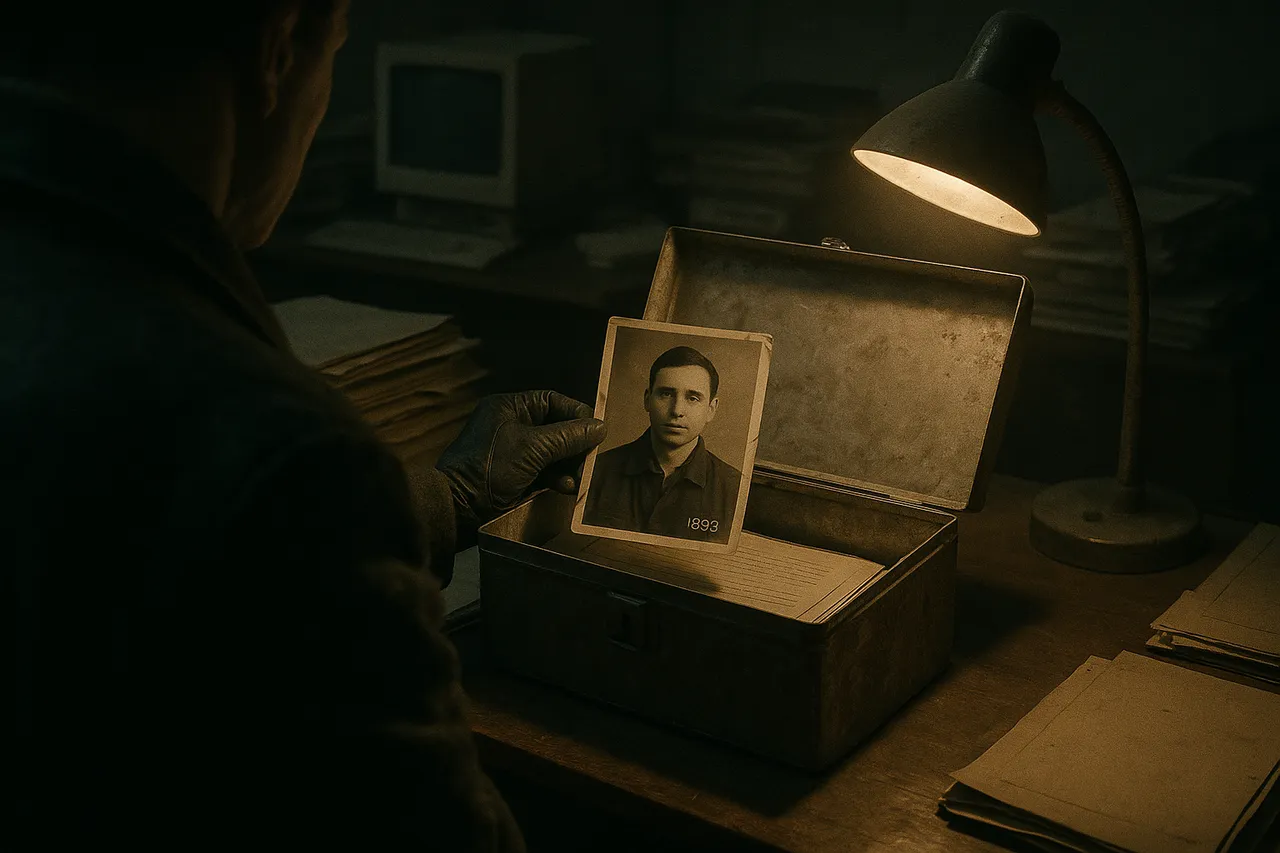
Photo from 1993: When the Dead Return in Post-Soviet Russia
The Discovery in the Communal Flat
Sverdlovsk, April 1994. An elderly man died alone in a communal apartment, one of thousands of such deaths in the chaotic first years after the Soviet collapse. No relatives came forward. No one claimed the body. The municipal authorities prepared for a pauper's burial, standard procedure in a city where the social safety net had disintegrated almost overnight.
During the mandatory inventory of personal effects, investigators opened a worn cardboard box containing the deceased's documents. Birth certificate, internal passport, military papers, ration cards from the war years. Layers of a life lived across seven decades of Soviet history. At the bottom of the box: a single photograph, colour stock, dated on the reverse in ballpoint pen—June 1993.
The photograph showed two men standing in front of a kiosk, the kind that had proliferated across Russian cities selling cigarettes, vodka, and imported chocolate bars. One of the men was the deceased. The other, according to official state records, had been dead since 1992.
The Bureaucratic Labyrinth of Soviet Death
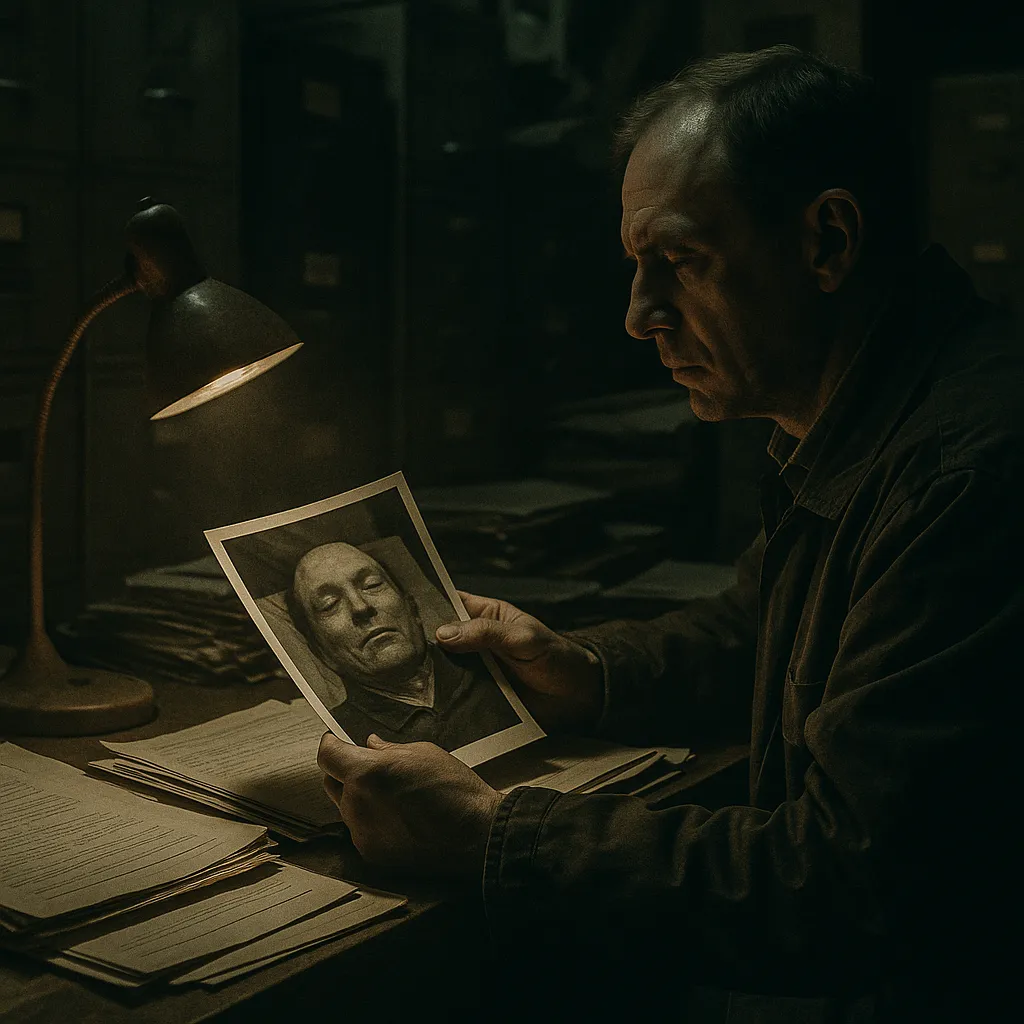
In the final years of the USSR and the early post-Soviet period, the administrative apparatus for recording vital statistics—births, marriages, deaths—began to fracture. Regional ZAGS offices (Civil Registry) operated with depleted staff, outdated filing systems, and no computerisation. Documentation moved between agencies at glacial speed, when it moved at all.
A death certificate issued in one oblast might not reach pension authorities for months. A person could be declared deceased by hospital paperwork yet continue drawing benefits because the cancellation order never arrived. The inverse also occurred: living citizens found themselves legally dead due to clerical error, their protests tangled in Kafkaesque appeals processes.
Historians studying this period have documented hundreds of cases where individuals were erroneously declared deceased. Most involved hospitalisation mix-ups, misidentified bodies from industrial accidents, or fraudulent declarations filed by relatives seeking to claim apartments under privatisation schemes. The 1992 Housing Privatisation Law created powerful incentives for such fraud—communal flats could be subdivided if a resident was legally dead, their room reassigned or sold.
But the Sverdlovsk photograph presented a different puzzle. This was not a bureaucratic error discovered by a living complainant. This was a dead man's archive pointing to someone who should not exist.
CrimeFile Episode 101: Photo from 1993
The case dramatised in CrimeFile Episode 101 places you inside this investigation. You inherit the document box, the photograph, and a city where half the population is trying to survive, the other half trying to disappear. Your task: determine who the second man in the photograph was, why he was declared dead, and what his relationship to the deceased might reveal about the tangled intersection of bureaucracy, survival, and identity in post-Soviet Russia.
The investigative challenge is multi-layered. Official records are incomplete and contradictory. Witnesses are scarce—communal flat residents in 1994 kept to themselves, mindful that asking questions could draw unwanted attention. The photograph itself offers limited forensic value; no fingerprints, no distinctive landmarks beyond the ubiquitous kiosk architecture of the era.
You must reconstruct timelines, cross-reference passport registration data, and navigate the informal economy that flourished in the gap between Soviet collapse and the establishment of new state structures. Were these men connected by blood, by wartime service, by criminal enterprise? Was the death declaration filed in error, or was it a deliberate act—an attempt to erase someone from the record, to free them from debts, obligations, or prosecution?
The Historical Context: Russia 1992–1994
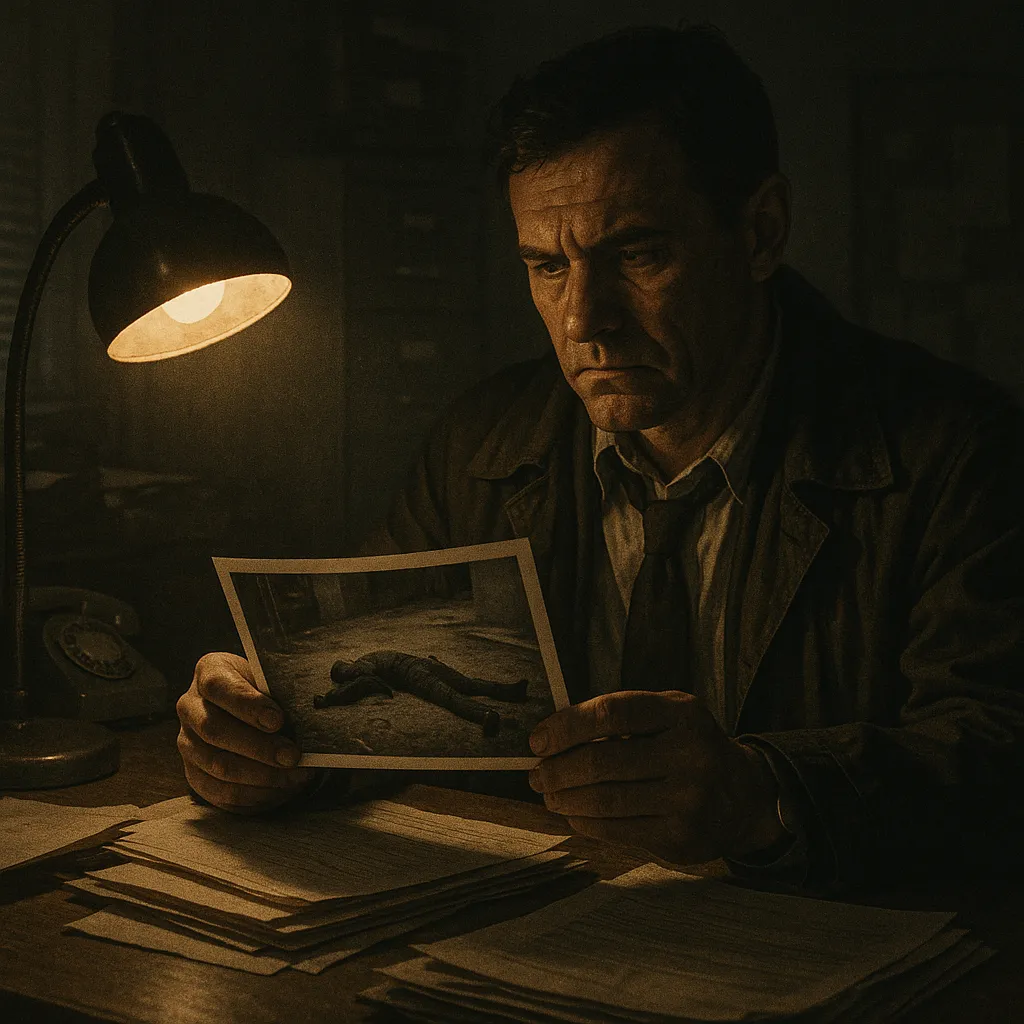
To understand the case, one must understand the period. By April 1994, Russia had endured two years of shock therapy economic reforms. State enterprises collapsed, wiping out employment for millions. Pensions lost 60-80% of their purchasing power to hyperinflation. The social contract of the Soviet era—guaranteed housing, employment, healthcare—had dissolved, replaced by what many Russians called bespredel: lawlessness, the absence of limits.
Communal flats, relics of Soviet housing policy, became pressure cookers of desperation. Residents schemed to claim extra rooms, to consolidate square metres that could be sold or rented. Elderly inhabitants, isolated and vulnerable, sometimes vanished from the official record before they vanished from life. Investigators in this period dealt with cases where pensioners had been declared dead by neighbours who forged documents, then occupied their rooms while the victims were still alive, locked in a corner of the apartment or placed in an unregistered care facility.
The photograph from 1993 raises all these possibilities. It is a fragment of evidence from a world where documentation was both sacred and suspect, where the state's power to define existence—through passports, registrations, death certificates—was wielded by clerks, hustlers, and desperate families navigating collapse.
The Investigative Method
Period-accurate detective work in this case requires understanding Soviet-era record-keeping systems. Internal passports contained propiska stamps showing legal residence registration. ZAGS death records listed cause, location, and informant—the person who reported the death. Military archives held service records that could confirm or contradict identity claims. Communal flat residency logs, maintained by building superintendents, tracked who lived where and when.
Each of these sources is fallible. Each can be manipulated. The investigator's task is to find the contradictions, the documents that do not align, the silences in the record that speak louder than the official entries. You are working in an environment where the truth is not a matter of accessing a central database—there is no database. The truth is scattered across paper files in basement archives, witnessed by neighbours who may lie to protect themselves, recorded in systems designed for a state that no longer exists.
The photograph is the only certainty. Two men, 1993, alive. Everything else must be proven.
Play Episode 101
Photo from 1993 is available now on the CrimeFile platform. The episode runs approximately 90-120 minutes depending on investigative choices. All documentary materials, witness statements, and archival records are drawn from historical research into post-Soviet criminal investigations and vital statistics administration.
No prior knowledge of Russian legal systems or 1990s history is required. The case teaches its own context through evidence. Your conclusions will be evaluated against the forensic and documentary standards that would have governed a real 1994 investigation in Sverdlovsk Oblast.