
The Coat on the Hook: A Leningrad Communal Apartment Mystery
The Scene
Leningrad, 1970s. Building 47 on Vosstaniya Street stood among the neoclassical façades that survived the siege, its interior subdivided into the cramped communal apartments—kommunalki—that housed much of the city's working population. Apartment 12 was home to five families, twenty-three people in total, sharing a single kitchen, one bathroom, and a narrow corridor lined with coat hooks.
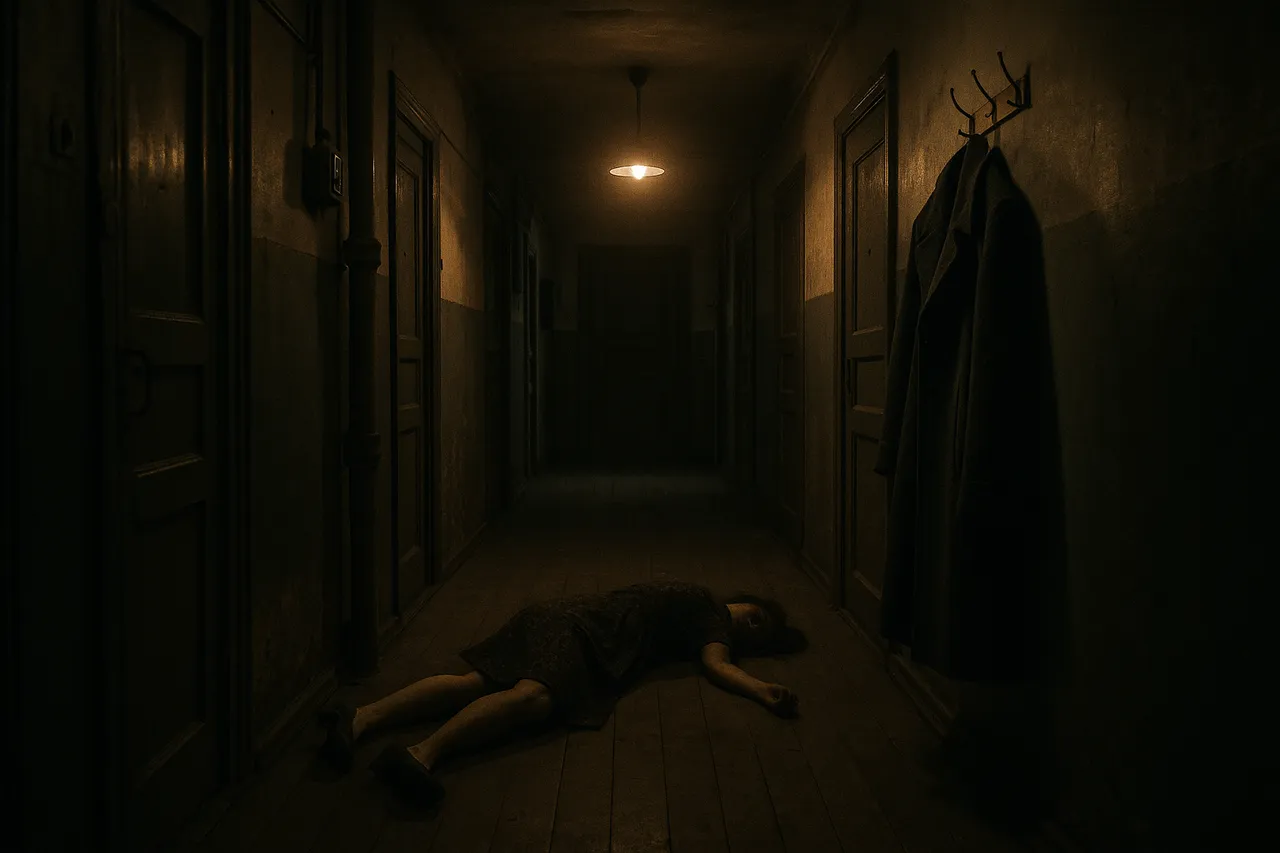
The body was discovered on a weekday morning. A woman in her thirties, resident of one of the apartment's smaller rooms. The initial report noted no signs of forced entry to the apartment's outer door. The coat—a dark woollen overcoat, neither expensive nor threadbare—hung on its usual hook. It became evidence not for what it concealed, but for what it represented: the routines of communal life, the proximity of strangers, the thin membrane between public and private.
The Komunalka Context
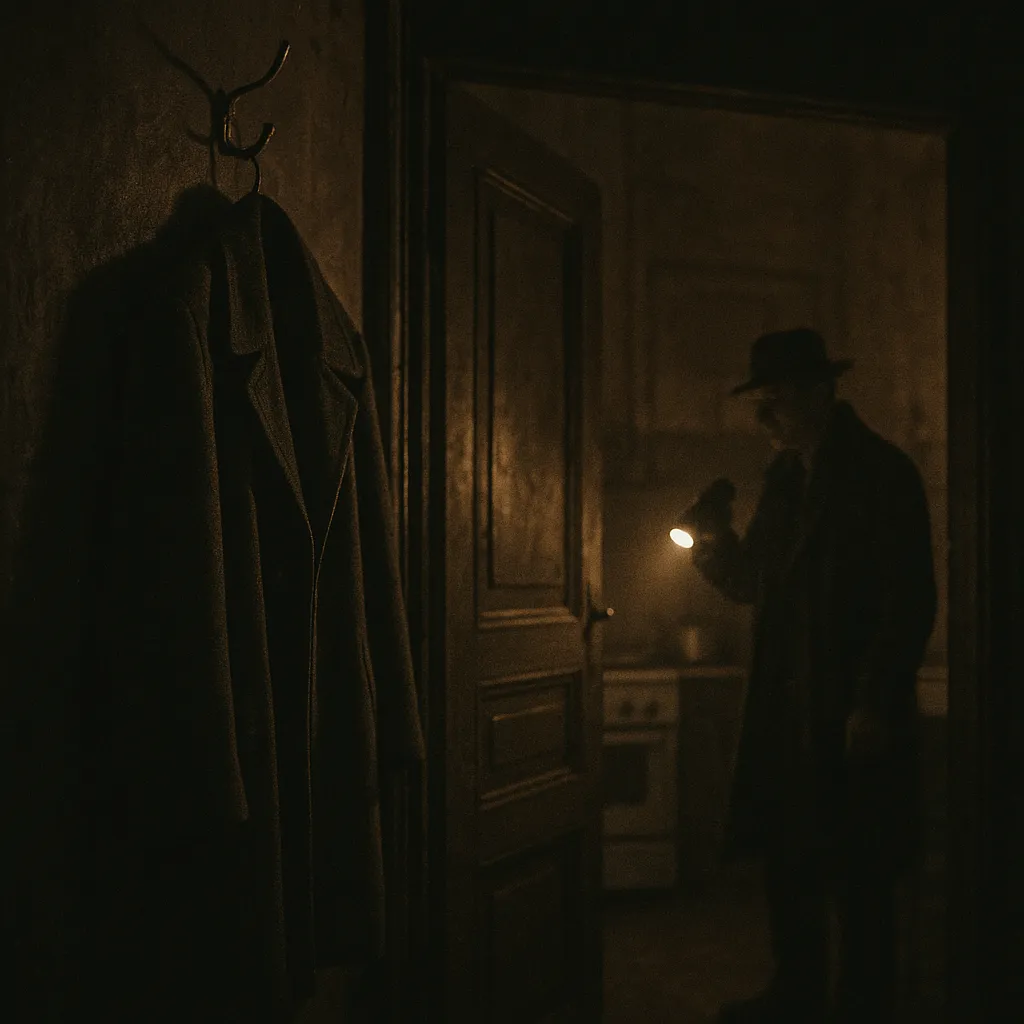
To understand Soviet-era apartment murders, one must first understand the kommunalka itself. These were not slums but a deliberate feature of Soviet housing policy. Families occupied single rooms, sometimes subdivided by curtains or plywood partitions. Kitchens operated on rotation schedules; bathroom queues formed each morning. Privacy was a bourgeois concept, theoretically obsolete.
In practice, communal apartments bred intimate resentments. Disputes over stove time, accusations of stolen butter, tensions over noise and odour—these were the stuff of Leningrad courts. The majority of domestic homicides in Soviet cities occurred not in private apartments but in kommunalki, where forced proximity turned minor grievances into violent flashpoints.
Vosstaniya Street's Building 47 was typical. Residents worked in factories, institutes, municipal services. Most had lived there for years, some since childhood. They knew one another's schedules, habits, quarrels. This density of knowledge complicated the investigation.
The Investigation
Leningrad's criminal militia (милиция) conducted kommunalka investigations with a standard protocol. Every resident was interviewed. Alibis were cross-checked against the testimonies of neighbours, who could often account for movements down to the quarter-hour. Physical evidence was catalogued: the position of the body, the state of the room, the coat.
Forensic pathology in the Soviet Union lagged behind Western standards in some respects but excelled in others. Leningrad's medico-legal bureau could determine time of death with reasonable accuracy, identify weapon types, detect certain poisons. What Soviet forensics lacked was the extensive serological and trace-evidence infrastructure available in, say, the FBI laboratories of the same period.
The coat became a point of contention. It had been worn recently—fibres on the shoulders suggested contact with another garment. But the deceased had not left the apartment that day, according to initial accounts. The coat's presence on the hook, undisturbed, implied either that the killer had replaced it carefully or that the woman had returned home, hung it, and then been attacked.
Witness testimony diverged. One neighbour recalled hearing raised voices the previous evening. Another insisted the apartment had been silent. A third mentioned seeing an unfamiliar man in the stairwell two days prior, though this detail was never corroborated.
Forensic Limitations and Investigative Doctrine
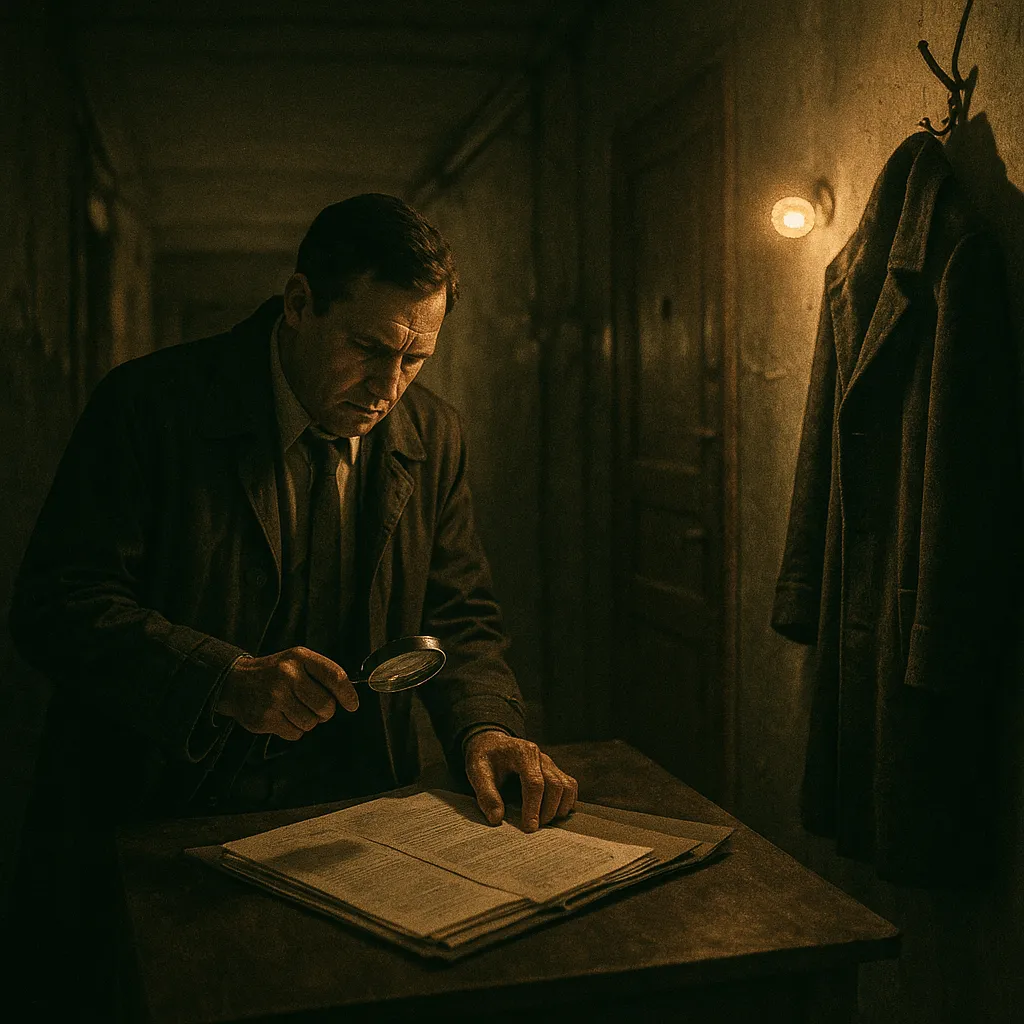
Soviet criminal procedure in the 1970s operated under the doctrine of material truth—the investigator's duty was not merely to build a prosecutable case but to establish objective reality. In practice, this often meant prolonged interrogations, pressure on witnesses to resolve contradictions, and a reliance on confessions.
Physical evidence was valued, but the investigative apparatus privileged human testimony. A fingerprint might place someone at a scene; a confession explained motive, method, intent. The Leningrad militia had access to fingerprint databases, rudimentary ballistics, and blood typing, but DNA profiling would not arrive in Soviet forensics until the late 1980s, and even then sporadically.
In apartment 12, the physical evidence was ambiguous. The coat, the position of the body, the absence of forced entry—all suggested someone familiar with the apartment's routines. But no weapon was recovered, and no blood trail led beyond the victim's room.
The Social Dimension
Communal apartment cases often turned on social dynamics invisible to outsiders. Leningrad in the 1970s was a city of queues, shortages, and informal networks. Access to goods—meat, fabric, Western records—depended on connections. Jealousies over these networks fuelled many disputes.
Several residents of apartment 12 worked in positions that granted minor privileges: one at a department store, another at a food distribution depot. Whether such privileges intersected with the case remains unclear from available records. Soviet criminal files from this period are incomplete; many were destroyed, others remain classified.
What is documented is the protracted nature of the investigation. Weeks became months. Residents were re-interviewed. The coat was sent for additional analysis. The case file grew but did not resolve.
Outcome and Unanswered Questions
The official outcome of the Vosstaniya Street case is not a matter of public record. Soviet-era criminal statistics were state secrets; individual case resolutions were rarely published unless they served a propaganda purpose. Anecdotal accounts from former Leningrad militia officers suggest that many kommunalka homicides ended in plea agreements or were administratively closed when evidence proved insufficient for trial.
What remains unresolved is the question the coat embodies: the tension between the routines of communal life and the opacity of individual motive. In a space where twenty-three people shared a corridor, how could a murder occur unseen? Or, perhaps more disturbingly, how could it occur in plain sight, understood by all, yet spoken of by none?
The Vosstaniya Street case is dramatised in CrimeFile episode 108, which reconstructs the investigation using period-accurate procedural methods and archival research. The episode does not claim to solve the case but rather to illuminate the investigative landscape of Soviet Leningrad—a world where the machinery of state power met the irreducible complexity of human motive.
Legacy
Communal apartments began to disappear in the 1980s as new housing construction accelerated. By the post-Soviet period, most Leningrad families—now St Petersburg residents—had moved into private flats. The kommunalka persists as a cultural artefact, a setting for films and literature, a symbol of both Soviet egalitarianism and its failures.
The unsolved murders of that era remain, filed in archives, remembered by aging investigators, sometimes resurrected by descendants seeking answers. The coat on the hook is such a fragment: a detail too specific to be invented, too ambiguous to be conclusive, and thus perfectly emblematic of cases that haunt not because they are spectacular, but because they are ordinary.