
How Real Detectives Solve Cases: Evidence, Interviews and Motive
The Method Behind Real Detective Work
Popular crime dramas compress weeks of work into forty minutes. Real detectives move slower, under tighter rules, and with far less certainty. The craft turns on three pillars: physical evidence, interviews and interrogation, and motive supported by corroboration.
This article walks through how real detectives solve cases, using documented examples from the United States and Europe in the late 20th and early 21st century. Procedures vary by country, but the logic is surprisingly consistent.
Securing the Crime Scene
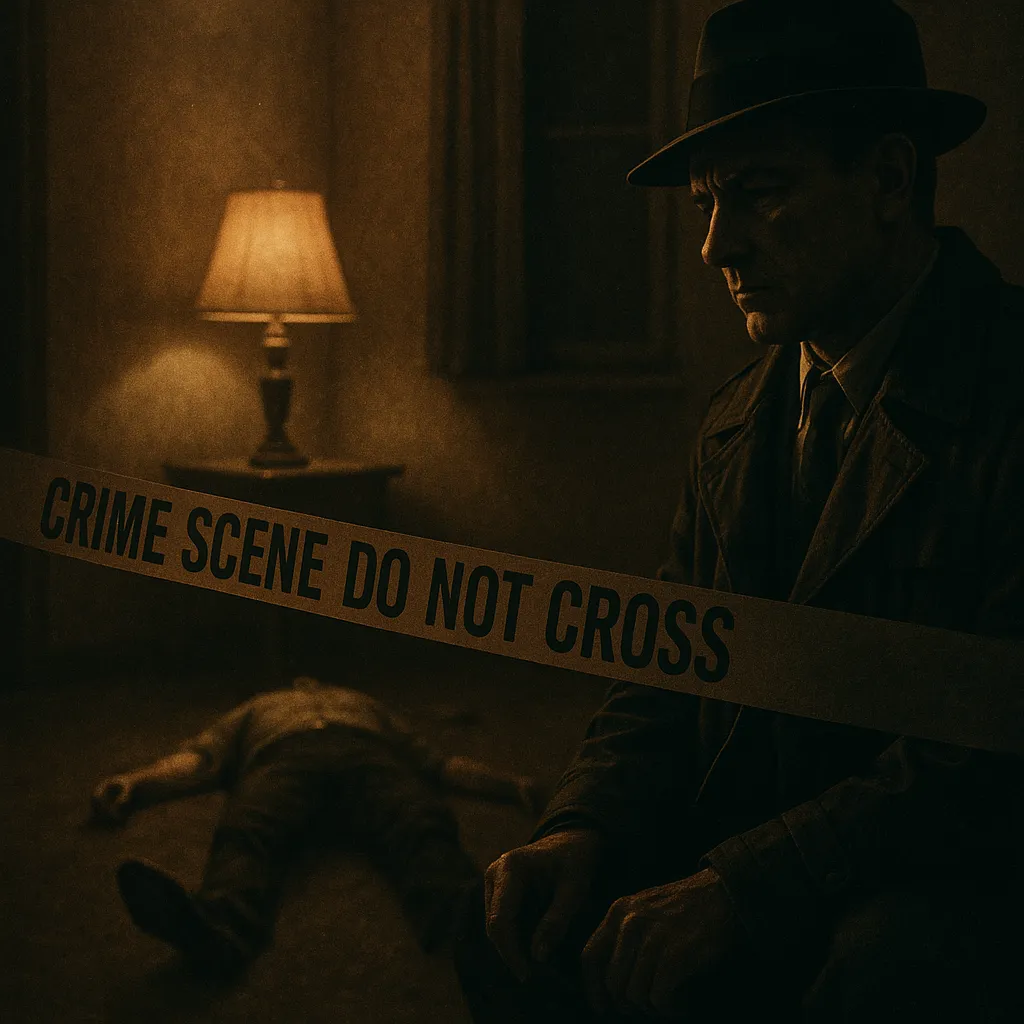
Real investigation starts with preservation, not deduction. First officers on the scene are trained to secure, observe, and log.
In most Western systems since at least the 1970s, standard steps include:
- Establishing an inner and outer cordon with tape or vehicles.
- Recording names and times of everyone who enters.
- Photographing and sometimes video-recording the scene before anything is moved.
- Creating a rough sketch marking bodies, shell casings, bloodstains, and key objects.
Failure at this first step can cripple a case. In the 1996 murder of six-year-old JonBenét Ramsey in Boulder, Colorado, the house was not properly sealed. Friends and family walked through the rooms. Detectives later acknowledged that the resulting contamination made interpretation of trace evidence far more difficult.
Collecting and Interpreting Physical Evidence
Once the scene is controlled, specialists document and collect physical evidence. Since at least the 1980s, this usually involves a team: crime scene technicians, photographers, and sometimes forensic pathologists.
Types of Evidence
Common categories include:
- Biological evidence: blood, saliva, hair, tissue. From the late 1980s onward, DNA testing transformed this category.
- Trace evidence: fibers, paint chips, glass fragments, gunshot residue.
- Pattern evidence: fingerprints, shoeprints, tire marks, tool marks, bloodstain patterns.
- Digital evidence: phone records, GPS data, CCTV, social media logs.
Each item is collected, packaged, and labeled according to chain-of-custody rules. The U.S. Supreme Court’s decision in Mapp v. Ohio (1961) made illegally obtained evidence vulnerable to exclusion, so detectives in the United States work closely with prosecutors to ensure collection is defensible.
The Colin Pitchfork Case: DNA as Detective
A landmark example of physical evidence leading an investigation is the Colin Pitchfork case in Leicestershire, England.
- Crimes: Sexual assaults and murders of Lynda Mann (1983) and Dawn Ashworth (1986).
- Location: Villages near Narborough, Leicestershire.
- Innovation: In 1986, geneticist Alec Jeffreys at the University of Leicester applied DNA fingerprinting to compare semen from the crime scenes.
The DNA profiles from both murders matched each other but not an early suspect, who then had to be released. Police organized a massive voluntary DNA screening of local men. Pitchfork persuaded a coworker to give a sample in his name, but the deception was overheard and reported. When Pitchfork’s own DNA was tested, it matched both crime scenes.
Here, detectives did not rely on confession first. They leaned on a clear forensic link, then built the rest of the case around it.
Witnesses, Interviews and the Art of Listening
Physical evidence is powerful, but most cases still depend on what people say. Detectives distinguish between three broad categories:
- Witnesses who saw or heard something relevant.
- Victims who survived and can describe the crime.
- Suspects whose statements may be self-incriminating.
Cognitive Interviews, Not Leading Questions
Since the 1980s, many departments have adopted forms of the cognitive interview for witnesses. The method, developed by psychologists Ronald Fisher and Edward Geiselman in the United States, aims to improve recall without suggesting answers.
Core features include:
- Asking open questions: “Tell me everything you remember,” rather than “Was the car red?”
- Allowing uninterrupted narrative before follow-ups.
- Reinstating context: asking the witness to picture the scene, sounds, smells.
- Changing the order of recall: asking the witness to recount events backwards in time.
British forces formalised broader guidance under the PEACE model from the early 1990s: Preparation and Planning, Engage and Explain, Account, Closure, Evaluation. This model is non-coercive and is now standard in the UK and several other countries.
False Memories and Identification Errors
Real detectives are trained—at least in theory—to fear mistaken eyewitnesses. The Innocence Project in the United States, founded in 1992, has documented over 375 DNA exonerations; in around 69% of those cases, eyewitness misidentification played a role.
One famous example is the case of Ronald Cotton in North Carolina. In 1984, Jennifer Thompson-Cannino was assaulted in Burlington. She studied her assailant’s face, then later identified Cotton in a photo array and line-up. He was convicted in 1985 and again in 1987 on retrial. DNA testing in 1995 excluded Cotton and identified the real perpetrator, Bobby Poole. Thompson-Cannino herself later became an advocate for reform.
Detectives who study such miscarriages of justice learn to treat eyewitness testimony as fallible data, not gospel. Good practice includes double-blind line-ups and clear instructions that the perpetrator may not be present at all.
From Interview to Interrogation
When a person is no longer just a witness but a suspect, the rules tighten.
Legal Frameworks: Miranda and Beyond
In the United States, the 1966 Supreme Court case Miranda v. Arizona held that suspects in custody must be informed of their rights: to remain silent, to an attorney, and to have an attorney present during questioning. If these Miranda warnings are not properly given, statements can be excluded.
Other countries have parallel protections. In England and Wales, the Police and Criminal Evidence Act 1984 (PACE) and its Codes of Practice set rules for detention and questioning. Interviews must be recorded; suspects must be cautioned that they do not have to say anything, although it may harm their defence if they fail to mention something later relied on in court.
Techniques: From Reid to Investigative Interviewing
Historically, many U.S. detectives were trained in the Reid Technique, popularised from the 1950s onward. It involves a confrontational approach once investigators believe the suspect is guilty: direct accusation, minimisation of moral blame, and interpretation of denials as deception.
Critics argue that when used improperly, such methods can generate false confessions, particularly from juveniles or people with cognitive impairments. The case of the Central Park Five (1989) in New York—five teenagers who falsely confessed to an assault and rape they did not commit—illustrates the risk. DNA later cleared them and pointed to serial offender Matias Reyes.
In response, several countries moved toward information-gathering models. The UK’s PEACE framework explicitly rejects manipulative tactics in favour of open questioning and careful documentation. Some U.S. agencies have begun to incorporate similar approaches, especially in federal investigations.
CrimeFile episodes often dramatise this tension: the urge to “break” a suspect versus the need to keep a case legally solid and ethically sound.
Motive: Why the Crime Happened
Physical traces and statements answer who and how. Motive answers why, and can be central when jurors must choose between competing narratives.
Classic Motive Categories
Investigators often think in broad motive types:
- Financial: insurance fraud, inheritance disputes, business conflicts.
- Emotional or relational: jealousy, revenge, domestic violence.
- Sexual: assaults, offences driven by paraphilias.
- Ideological: political, religious, or nationalist aims.
- Concealment: killing to cover another crime or secret.
In courtroom practice, motive is not always required to convict, but the absence of any coherent motive can make a jury more sceptical.
The Green River Killer: Victimology and Motive
Consider Gary Ridgway, the so‑called Green River Killer, active around Seattle, Washington, from 1982. Ridgway targeted vulnerable women and girls, many of them sex workers or runaways. For years, investigators struggled with a huge pool of missing persons and fragmented evidence.
Physical evidence finally caught up: in 2001, a DNA profile from victim remains matched Ridgway, who had long been a suspect. But understanding his motive—misogynistic contempt for his victims, mixed with a drive to control and a desire to “clean up” the streets, according to his later statements—helped prosecutors frame a coherent narrative at sentencing.
This pattern-recognition work, sometimes called victimology, helps detectives:
- Identify likely future victims or dump sites.
- Distinguish serial killings from isolated events.
- Challenge or support alibis by matching a suspect’s known movements to the offender’s apparent hunting ground.
Building and Testing Theories
Detectives do not solve cases in a straight line. They generate hypotheses, test them against the evidence, and discard or refine them.
Many modern units use some form of case management system or “Holmes”-type software (named after the UK’s Home Office Large Major Enquiry System) to track actions, statements, and exhibits.
Example: The Yorkshire Ripper Investigation
The hunt for Peter Sutcliffe, known as the Yorkshire Ripper, shows how theory can both help and hinder.
- Period: 1975–1980.
- Location: Northern England, primarily West Yorkshire and Greater Manchester.
Detectives correctly saw a pattern of attacks on women, many of them sex workers. But they placed too much weight on hoax communications—letters and a tape claiming to be from the killer—which misled them toward a suspect with a Sunderland accent. Sutcliffe, a lorry driver from Bradford, had been interviewed nine times but not prioritised.
The lesson on many detective training courses: once a theory hardens into tunnel vision, even good investigators can miss what is in their files. Modern practice emphasises review teams who periodically re‑examine evidence from a fresh perspective.
Cold Cases and New Science
When leads dry up, cases become cold. They are not forgotten, but active work slows. Advances in forensic science sometimes bring them back to life.
Forensic Genealogy: The Golden State Killer
One of the most discussed recent examples is the arrest of Joseph James DeAngelo in California in 2018.
- Crimes: A series of burglaries, rapes and murders across California from 1974 to 1986, attributed to an unidentified offender dubbed the Golden State Killer.
- Evidence: DNA from multiple crime scenes preserved in evidence lockers.
By the 2010s, traditional database searches (CODIS in the United States) had failed to find a direct match. Investigators tried a new tactic: genetic genealogy. They uploaded modified crime-scene DNA profiles to public genealogy databases used by people researching family history. By identifying distant relatives of the offender, genealogists built a family tree pointing to DeAngelo.
Detectives then obtained a discarded DNA sample from him—reportedly from a car door handle or similar item—and matched it to the preserved crime-scene DNA. The science did not act alone; detectives still had to place DeAngelo in the right locations and times. But the technique shifted the case from impossible to solvable.
This method has since been used in dozens of other cases, raising complex privacy and legal questions. Real detectives now operate in a landscape where data can be as incriminating as a fingerprint.
Paperwork, Prosecutors and the Courtroom
The visible detective work ends not with an arrest, but with a case file.
A typical major case file contains:
- A chronological log of investigative actions.
- Crime scene reports and diagrams.
- Forensic laboratory reports.
- Transcripts or recordings of interviews.
- Search warrants and legal authorisations.
- Analytical summaries and suspect profiles.
Detectives work with prosecutors to decide what charges to bring and how to present the evidence. Weak points are flagged: an unreliable witness, a lab result with a wide confidence interval, a confession that might be challenged. The goal is not simply to secure a conviction, but to secure one that survives appeal.
How Games Like CrimeFile Use Real Methods
True‑crime games and interactive stories borrow heavily from genuine detective procedure. CrimeFile episodes, for example, are structured around the same three pillars: evidence, interviews, and motive.
Players learn, implicitly, how real detectives:
- Protect scenes to avoid contamination.
- Compare conflicting witness accounts.
- Resist tunnel vision by testing alternative theories.
- Use motive as a tool, not a shortcut.
The real world lacks tidy resolutions and perfect clues. But the logic that guides investigators—follow the evidence, listen carefully, understand why as well as how—remains the same, whether in a 1970s British mill town, a 1980s California suburb, or a digital case file on a laptop screen.