
How Real Detectives Read a Crime Scene: Evidence, Motive, and the Art of Interrogation
The First Walk-Through: Controlling the Scene
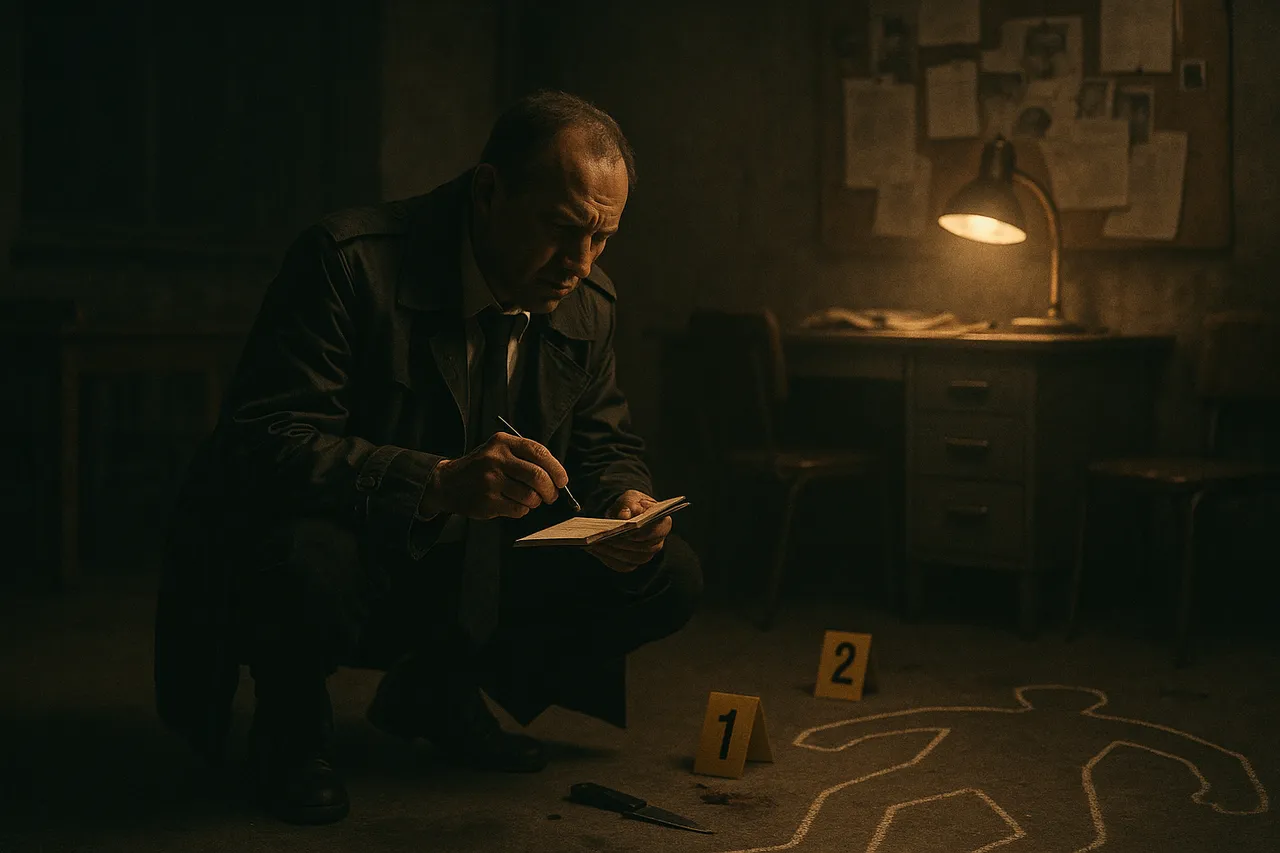
When homicide detectives arrive at a crime scene, their first action is containment. Before any evidence is touched, the perimeter is secured, witnesses are separated, and a single entry path is designated. This protocol, standardised in American departments after the 1960s, prevents contamination that can render trace evidence worthless in court.
Detective Frank Serpico, working NYPD cases in the early 1970s, described the walk-through as "reading a room like a book written in blood and silence." The lead investigator moves slowly through the scene, noting spatial relationships before forensic technicians begin their work. Where is the body positioned? What furniture is disturbed? Are windows open, doors forced, lights on or off?
In the 1984 murder of Helle Crafts in Connecticut, investigators noted wood chips scattered in a seemingly unrelated pattern across a riverbank. This observation—recorded during the initial walk-through—later proved critical when a woodchipper was identified as the disposal method. The case became the first successful murder prosecution in the United States without a recovered body.
Physical Evidence: What Remains When Memory Fails
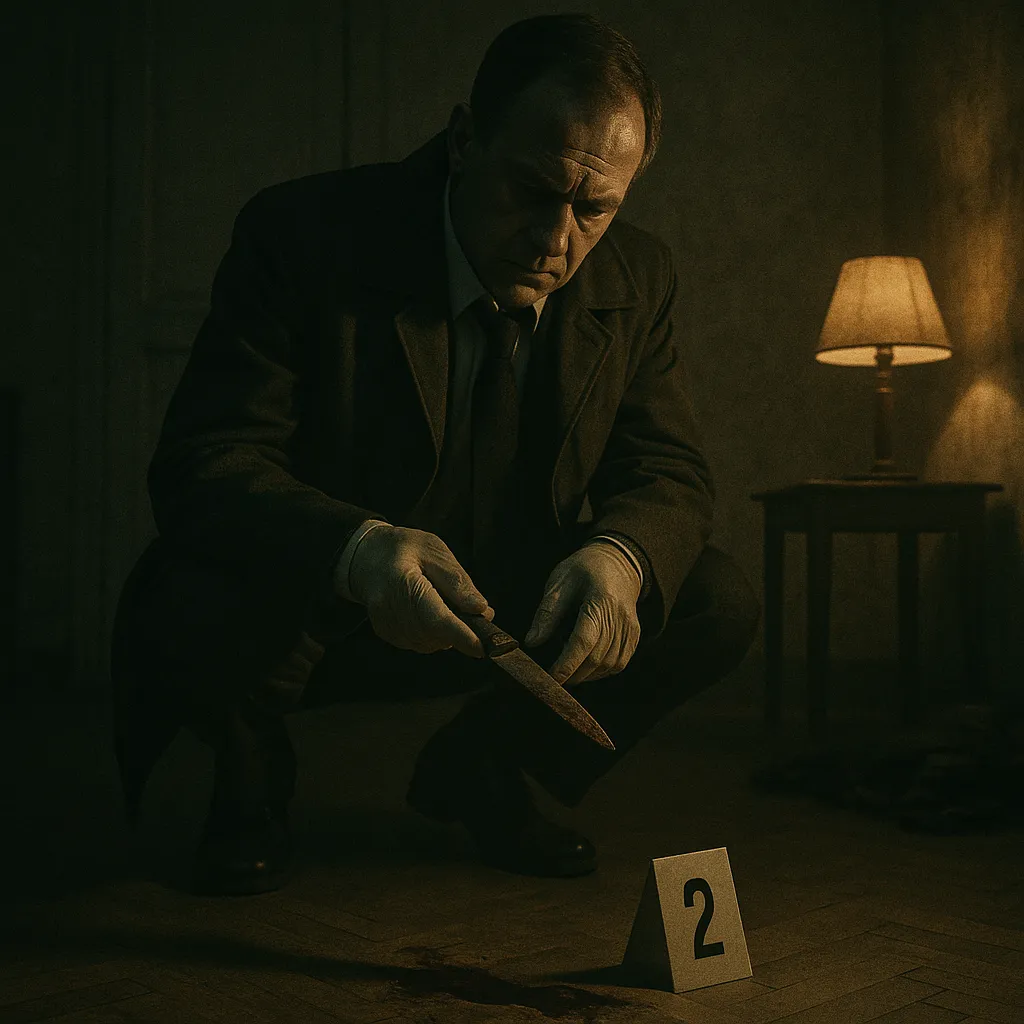
Physical evidence divides into two categories: transient and permanent. Transient evidence degrades rapidly—odours, temperatures, wet bloodstains. Permanent evidence includes weapons, projectiles, biological samples, and trace materials like fibres or glass fragments.
The 1978 murder of Barbara Jean Horn in Tacoma illustrates why systematic collection matters. Initial responders noted a faint petroleum smell but failed to document it. When Ted Bundy was later linked to the scene through hair evidence, the degraded transient evidence could not be used to place his Volkswagen Beetle at the location, weakening the prosecution's timeline.
Modern crime scene photography follows strict protocols: overall scene shots, mid-range relationship photos, and extreme close-ups with measurement scales. Video walk-throughs are now standard in many jurisdictions, though their admissibility varies. The key principle remains unchanged since the 1930s: document before you touch.
Motive: The Prosecutor's Narrative Tool
Legally, motive is not required to prove murder. Practically, juries struggle to convict without understanding why. Detectives construct motive through victim background investigations, financial records, relationship histories, and pattern analysis.
In the 1990 murder of Diane Newton King in Battle Creek, Michigan, investigators initially pursued a stranger-abduction theory. A meticulous review of the victim's husband's whereabouts revealed he had reported his gun stolen two weeks before the shooting—a theft never previously mentioned. This timeline discrepancy shifted the motive theory from random violence to domestic homicide. Bradford King was convicted in 1991.
Motive categories remain consistent across cultures and eras: financial gain, sexual jealousy, revenge, elimination of witnesses, ideological conviction. Soviet investigator Mikhail Gerasimov, working in the 1960s-70s, used facial reconstruction not just for victim identification but to understand victims' social worlds—who they were shaped whom they knew, and whom they might threaten.
Alibi Verification: Where Were You?
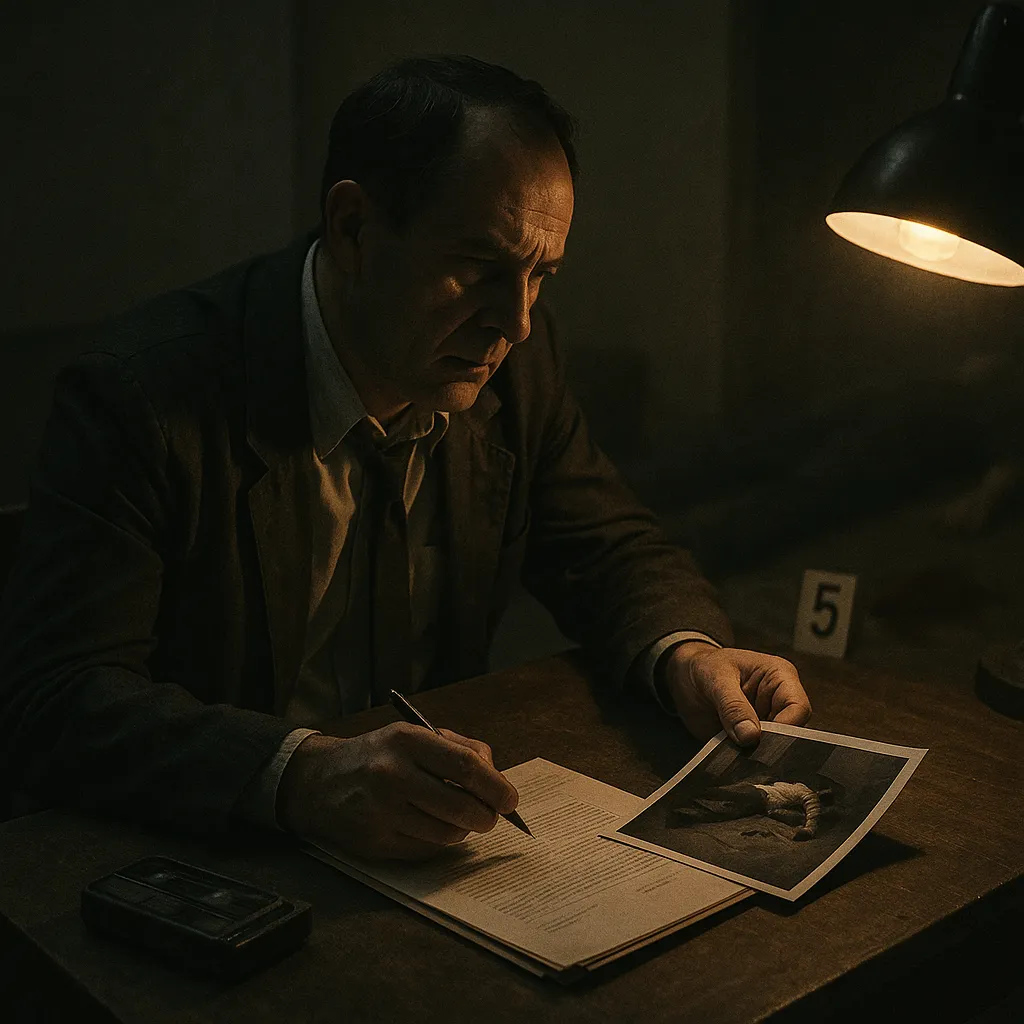
An alibi is a claim of absence from the crime scene during the window of death. Strong alibis involve multiple independent witnesses, documentary evidence (receipts, video, phone records), or physical impossibility (hospital admission records, incarceration).
Detectives verify alibis by working backward from the confirmed time of death. Pathologists provide a window, often several hours wide. Investigators then attempt to place the suspect within that window using cellular tower data, automatic license plate readers, credit card transactions, or witness statements.
The 1995 O.J. Simpson case turned substantially on a compressed timeline. Prosecutors argued Simpson had only minutes to commit the murders and return home before the limo driver arrived. The defence presented alternative timelines using traffic patterns and estimated travel times. This battle over temporal windows demonstrates why detectives meticulously document every claimed movement.
False alibis collapse under detail. In the 2008 murder of Travis Alexander, Jodi Arias claimed she was never in Arizona on the day of the killing. Cell tower pings, rental car records, and a digital camera found in the washing machine (containing timestamped photos) dismantled her alibi piece by piece. She was convicted in 2013.
The Interrogation Room: Control Through Architecture
Interrogation rooms are designed for psychological pressure. They are small (typically 8×10 feet), windowless, and soundproofed. Chairs are uncomfortable. The suspect sits farthest from the door, closest to a blank wall. The interviewer controls the distance.
The Reid Technique, developed in the 1950s by polygraph expert John Reid, remains widely taught despite controversy over false confessions. It proceeds in nine steps: direct confrontation, theme development (offering moral justifications), handling denials, overcoming objections, retaining the suspect's attention, handling passive mood, presenting an alternative question (Did you plan this or was it an impulse?), having the suspect describe details, and converting the oral confession to written form.
Critics argue the Reid method, especially when applied to juveniles or intellectually disabled suspects, produces false admissions. The 1989 Central Park jogger case confessions, later vacated after DNA exoneration, were obtained using Reid-style tactics during marathon interrogation sessions.
British detectives, operating under the Police and Criminal Evidence Act 1984 (PACE), use a less confrontational model: establish rapport, explain the caution (right to silence), ask open questions, listen without interruption. PEACE (Planning and Preparation, Engage and Explain, Account, Closure, Evaluate) replaced accusatory methods in England and Wales by the mid-1990s.
Reading Deception: Behavioural Analysis
Detectives are taught to watch for behavioral clusters, not single gestures. Crossing arms means nothing in isolation; combined with gaze aversion, speech hesitations, and leg bouncing, it suggests stress—though stress alone does not prove guilt.
FBI profiler Robert Ressler, interviewing serial murderers in the late 1970s, noted that verbal tics mattered more than body language. Edmund Kemper referred to victims in passive voice ("She was picked up") rather than active ("I picked her up"), distancing himself grammatically from agency. These linguistic patterns now inform statement analysis.
Polygraph examinations remain inadmissible in most courts but are used as investigative tools. They measure physiological stress, not lies. In the 1994 Susan Smith case, her failing a polygraph about her sons' disappearance redirected the investigation from carjacking to infanticide. She confessed within days.
The Paper Trail: Following the Money
Financial records often reveal motive invisible in the crime scene itself. Life insurance policies purchased shortly before a spouse's death, large cash withdrawals, sudden account closures—these patterns prompt further inquiry.
In the 2003 murder of Laci Peterson, detectives subpoenaed Scott Peterson's computer and found searches for "Amber Frey massage therapist" conducted before he claimed to have met his mistress by chance. They also discovered he had researched San Francisco Bay currents and purchased a boat—without telling his pregnant wife. Laci's body surfaced near the boat launch Scott had used. He was convicted in 2004.
Modern financial forensics involve cryptocurrency tracing, Venmo transaction histories, and IP address geolocation. The 2017 Delphi murders investigation used Snapchat metadata and cell tower triangulation to establish the victims' final movements, though the case remained unsolved until an arrest in 2022 based on witness interviews and ballistic evidence.
The Limits of Certainty
Detectives operate under uncertainty. Eyewitness testimony is notoriously unreliable; memory degrades and reshapes under stress. Physical evidence can be planted, contaminated, or lost. Confessions can be coerced.
The 1989 conviction of the Birmingham Six in England collapsed in 1991 when forensic evidence was revealed to be mishandled and confessions obtained under duress. The case reshaped British investigative standards and underscored the need for documented chains of custody.
Real detective work is methodical, frustrating, and often inconclusive. Cases go cold because witnesses disappear, evidence degrades, and budgets run out. The detectives who succeed combine procedural rigor with psychological intuition—reading the crime scene not as a static tableau but as a narrative written in absence and violence.