
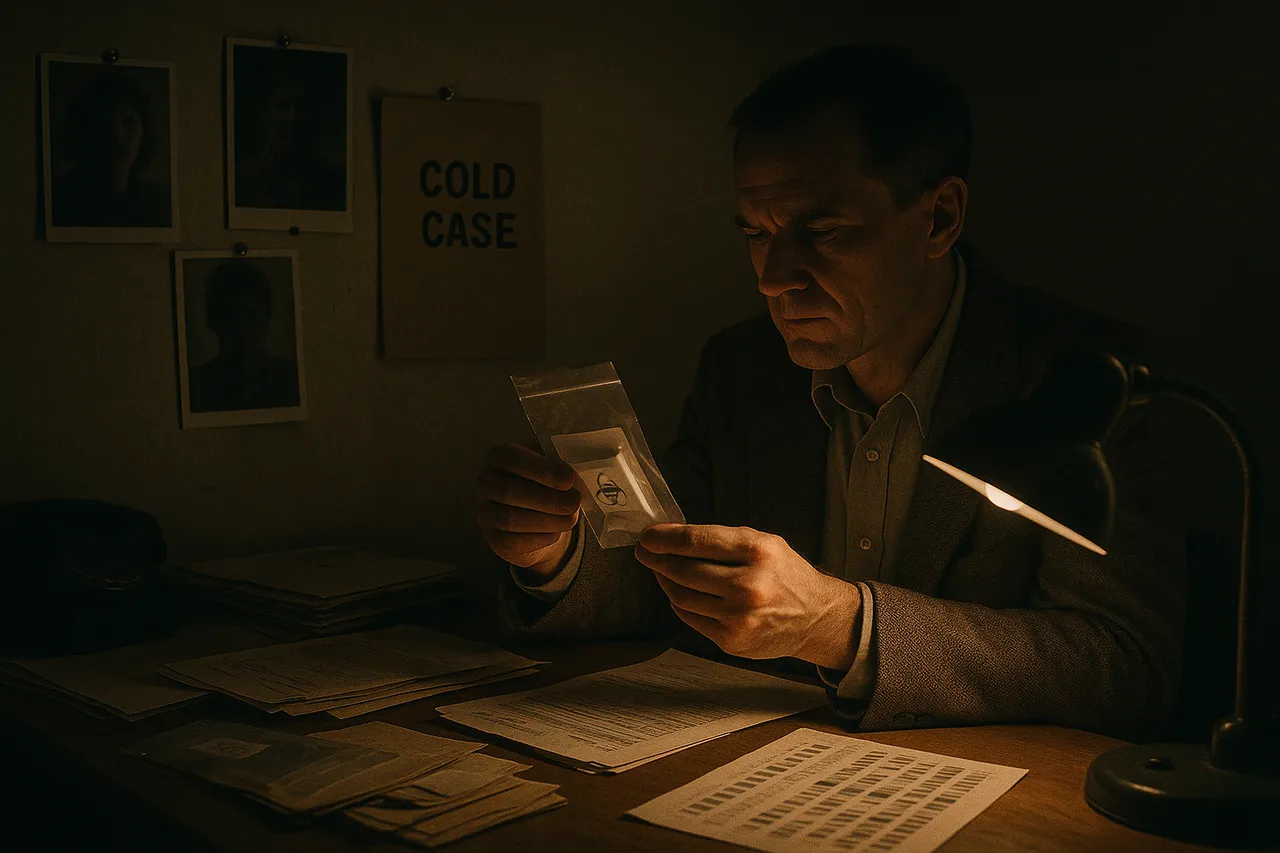
How Forensic Genealogy Solved Cold Cases After Decades
The Science That Broke Open Cold Cases
Forensic genealogy emerged in the late 2010s as a revolutionary investigative technique combining traditional DNA evidence with commercial genealogy databases. Unlike standard forensic DNA comparison—which requires an exact match in CODIS or other law enforcement databases—forensic genealogy identifies suspects through familial DNA relationships.
The method works by uploading crime scene DNA profiles to public genealogy platforms like GEDmatch, where investigators search for partial matches indicating distant relatives. Genetic genealogists then construct family trees, narrowing down potential suspects through birth records, census data, and other public documents. Once a shortlist emerges, traditional detective work and court-ordered DNA samples confirm identity.
This technique entered public consciousness in April 2018 when it identified Joseph James DeAngelo as the Golden State Killer—a case that had confounded California law enforcement for four decades.
The Golden State Killer: Case Study in Genomic Investigation
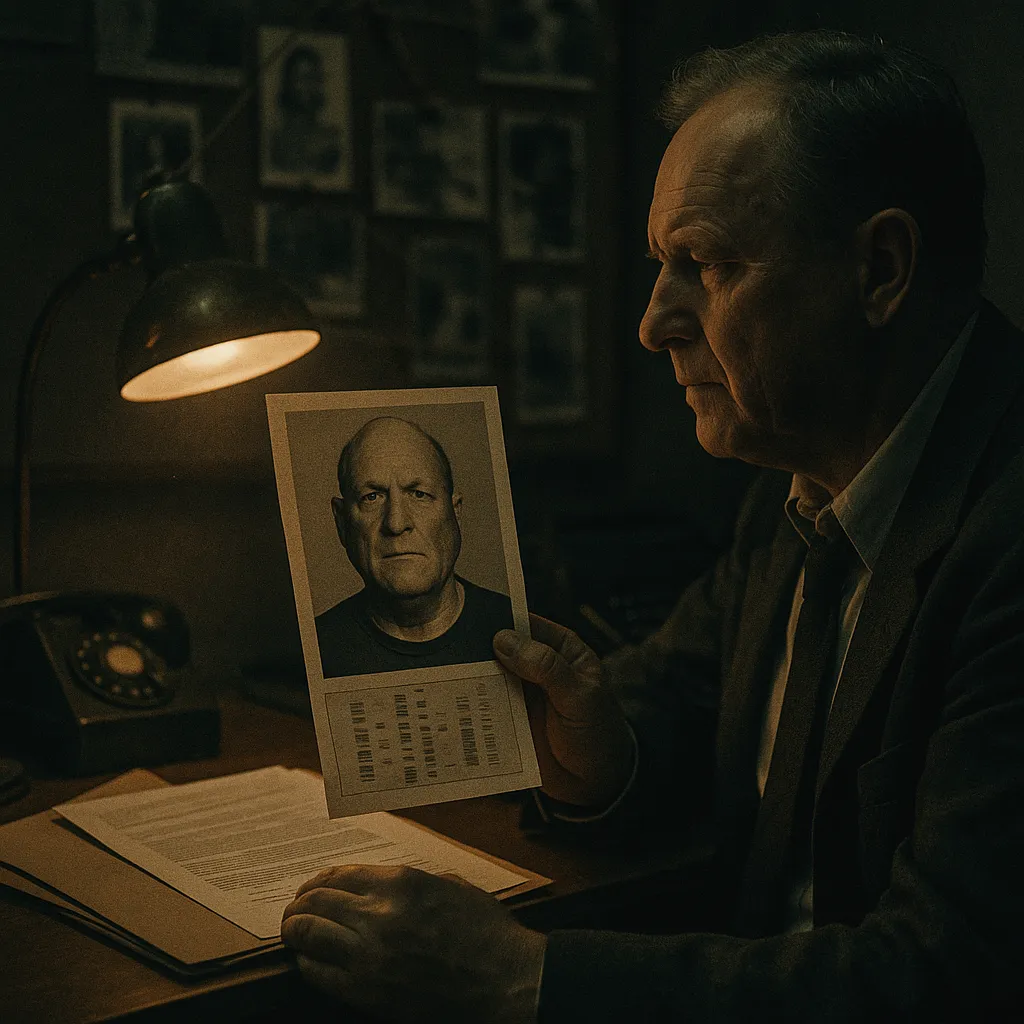
Between 1974 and 1986, an unidentified offender committed at least thirteen murders, fifty rapes, and over one hundred burglaries across California. Police gave him various names: the East Area Rapist, the Original Night Stalker, the Visalia Ransacker. DNA evidence linked many crimes by 2001, but no suspect emerged.
DNA from crime scenes sat in evidence rooms for decades. Detectives ran profiles through CODIS repeatedly with no hits. The case went cold despite massive investigative resources.
In 2017, investigator Paul Holes partnered with genetic genealogist Barbara Rae-Venter. They uploaded the crime scene DNA profile to GEDmatch in late 2017. The search returned distant cousins—people sharing small DNA segments with the unknown offender.
Rae-Venter built family trees backward through public records, identifying common ancestors born in the 1800s. She then traced forward through marriage records, birth certificates, and obituaries. By April 2018, the tree narrowed to Joseph James DeAngelo, a former police officer living in Sacramento County.
Sacramento detectives obtained DeAngelo's discarded DNA from his car door handle. Laboratory comparison confirmed a match to crime scene evidence. DeAngelo, seventy-two years old, was arrested on April 24, 2018. He pleaded guilty in 2020 to thirteen murders and kidnapping charges, receiving life imprisonment without parole.
Earlier Cold Cases Solved Through Genetic Genealogy
The Golden State Killer arrest proved the technique's viability, triggering hundreds of investigations:
William Earl Talbott II was arrested in May 2018 for the 1987 murders of Jay Cook and Tanya Van Cuylenborg in Washington state. The young Canadian couple was found dead near Seattle after their van disappeared. DNA from the crime scene yielded no CODIS match for thirty-one years. Genetic genealogy through GEDmatch identified Talbott, a truck driver with no prior connection to the victims. A jury convicted him in 2019.
Jerry Westrom faced charges in February 2019 for the 1993 murder of Jeanne Ann Childs in Minneapolis. Childs, thirty-five, was stabbed to death in her apartment. DNA recovered from her body went unmatched until forensic genealogists identified Westrom through family trees. Police obtained his DNA from a discarded napkin at a hockey game. He was convicted in 2023.
Terrence Miller was arrested in 2019 for the 1972 murder of Jody Loomis, a twenty-year-old woman found dead near Snohomish County, Washington. The case remained unsolved for forty-seven years despite DNA evidence. Genetic genealogy built a family tree connecting crime scene DNA to Miller's relatives. A cup he threw away at a restaurant provided confirming evidence.
How the Technique Works: Technical Process

Forensic genealogy requires high-quality DNA samples. Investigators extract DNA from crime scene evidence—blood, semen, saliva, skin cells—and generate a Single Nucleotide Polymorphism (SNP) profile. This profile identifies specific genetic markers across the genome, different from the short tandem repeat (STR) profiles used in CODIS.
The SNP profile is uploaded to genealogy databases designed for consumer use. GEDmatch became the primary platform because users could upload data from any testing company and the database allowed law enforcement access.
The database returns a list of genetic matches ranked by shared centimorgans (cM)—a unit measuring genetic similarity. Close relatives share thousands of cM; distant cousins might share only 20-50 cM. A typical forensic search returns third, fourth, or fifth cousins.
Genealogists reverse-engineer family trees from these matches. They identify the most recent common ancestor (MRCA) shared by multiple matches, then trace descendants forward. Birth, marriage, death, and census records narrow the pool. Investigators eliminate candidates who were incarcerated, deceased, or geographically distant during the crime.
Once a suspect is identified, police must obtain a legal DNA sample—usually through a discarded item (abandoned property) or a court-ordered warrant. Laboratory testing confirms the match.
Legal and Ethical Considerations
Forensic genealogy operates in a grey area of privacy law. The Fourth Amendment protects against unreasonable searches, but discarded DNA and public genealogy databases complicate this protection.
In Maryland v. King (2013), the US Supreme Court ruled that DNA collection from arrestees is constitutional. However, that case involved direct matches, not familial searching through third parties.
GEDmatch updated its terms in 2019, requiring users to opt in for law enforcement searches after privacy concerns emerged. The platform saw a significant reduction in available profiles, though many users chose to participate in criminal investigations.
Critics argue the technique implicates innocent relatives who never consented to criminal database inclusion. Genetic privacy advocates warn that building family trees from DNA involves collecting data on people who are not suspects and have committed no crime.
Proponents counter that investigators use only publicly available records and that suspects are confirmed through legal DNA collection. They note that traditional detective work also involves questioning innocent people.
In 2019, the Department of Justice issued interim guidelines restricting federal use of forensic genealogy to violent crimes and unidentified human remains. Some state legislatures have introduced bills regulating the practice.
The Impact on Cold Case Units
Hundreds of unsolved murders and sexual assaults have been reopened since 2018. Police departments without genetic genealogy expertise partner with private firms like Parabon NanoLabs and Othram, which offer forensic genealogy as a commercial service.
The technique is resource-intensive. Building a single family tree can take weeks or months. Genealogists must verify each relationship through documentary evidence, a process requiring historical records expertise.
Not every case yields results. DNA samples degrade over time; some crime scene evidence is insufficient for SNP profiling. If no relatives appear in genealogy databases, the search fails. The technique also struggles with endogamous populations—communities where many people share ancestors—because genetic matches become difficult to interpret.
International Application and Limitations
Forensic genealogy remains primarily an American technique. The United States has the world's largest consumer genealogy databases, reflecting cultural interest in ancestry research.
European privacy laws restrict forensic use of genetic data. The General Data Protection Regulation (GDPR) imposes strict consent requirements that complicate law enforcement access to genealogy platforms. Some European investigators have explored the technique for war crimes and unidentified remains, but its use in criminal investigation faces legal barriers.
In countries with smaller genealogy database populations, the technique has limited utility. Australia and Canada have seen some application, but fewer cases than in the US.
The Future of Genetic Investigation
Forensic genealogy will likely expand as DNA databases grow. More people submit DNA for ancestry testing each year, increasing the odds of finding investigative leads.
Technological advances may allow genealogical analysis from smaller or degraded DNA samples. Computational tools are improving the efficiency of family tree reconstruction.
Legislative frameworks will evolve. Courts will clarify constitutional boundaries. Public debate will shape policy on genetic privacy versus public safety.
The technique represents a paradigm shift in criminal investigation—proof that old evidence can yield new answers when viewed through emerging technologies.