
What's New on CrimeFile: Episodes, Tools, and the Road Ahead
New Episodes in the Archive
CrimeFile now hosts forty-seven playable case files. The additions span three continents and six decades. Episode 44 dramatises a 1982 Stockholm homicide solved through witness pattern analysis. Episode 46 covers a 1970s Soviet disappearance case that remained officially closed until archival disclosure in the 1990s. Episode 47 examines a forensic linguistics breakthrough in a 1995 extortion investigation.
Each case was selected for investigative depth, not notoriety. The emphasis remains on method: how evidence was gathered, how leads were prioritised, how dead ends were recognised and abandoned. Players work with primary documents — witness statements, lab reports, surveillance logs — not narrative summaries.
Evidence Filtering and Timeline Views
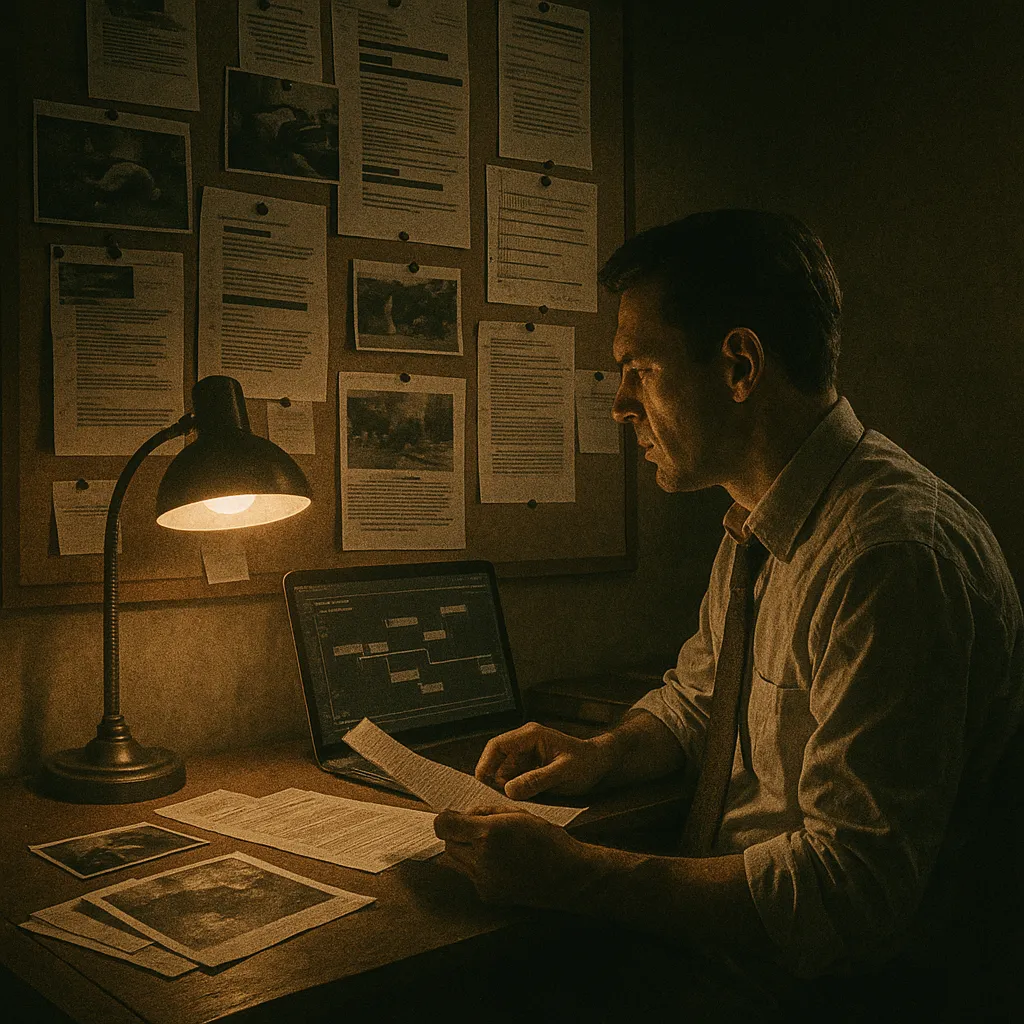
Two interface changes alter how you navigate case material. The evidence panel now supports multi-criteria filtering: tag by witness, date range, evidence type, relevance score. You can isolate all statements from a single source or compare forensic reports filed within a forty-eight-hour window.
The timeline view has been rebuilt. Events now display on a scrollable axis with zoom control. Overlapping incidents — two witnesses placing the suspect in different locations at the same hour — are flagged visually. The system does not interpret contradictions; it surfaces them. Analysis remains the player's task.
These are not cosmetic updates. Cold cases hinge on pattern recognition across fragmented data. The tools now make patterns visible without dictating conclusions.
What Players Are Asking For
The feedback form has been open for eight months. Three requests recur: collaborative gameplay, difficulty calibration, and archival expansion into non-Western jurisdictions.
Collaborative mode is in development. The technical challenge is synchronising evidence review without spoiling deductive work. Early prototypes allow shared case boards where players can annotate documents and vote on hypotheses without seeing each other's notes until a designated checkpoint. Testing begins in Q2.
Difficulty calibration is harder to solve. Real investigations do not offer difficulty settings. Some cases break open with a single witness; others remain unsolved despite years of competent work. The platform will not artificially gate evidence, but it will offer optional tutorial cases with structured guidance for new players. Veterans can ignore them.
Geographic expansion requires archival access and translation resources. The next batch of episodes will include cases from Latin America, sub-Saharan Africa, and Southeast Asia. Release schedule depends on source material clearance.
No Monetisation Pressure

CrimeFile does not operate on engagement metrics. There are no daily login bonuses, no timed challenges, no premium currency. You pay once per episode or subscribe for archive access. The business model is simple: make something worth paying for, then let people pay for it.
This approach has limits. Development is slower than venture-funded competitors. The catalogue grows incrementally, not explosively. The trade-off is editorial control. Episodes are not designed to maximise retention or average session length. They are designed to feel like investigations.
The Archive as Resource
Several university criminology programmes now assign CrimeFile episodes as supplementary material. Students analyse investigative decision-making in historical cases without the ethical complications of role-playing active investigations. The platform was not built for academic use, but the fit is logical.
Instructors receive free institutional access. The only requirement is that student work not be published externally without case-specific clearance. Some episodes involve living witnesses or pending legal questions.
What's Next
The roadmap for the next six months: eight new episodes, collaborative mode beta, mobile optimisation for evidence review, and expanded archival search by investigative technique (forensic genealogy, behavioral analysis, financial tracing).
Longer term: a case editor for user-generated scenarios, multilingual support beyond English and Russian, and an API for third-party investigative training tools.
None of these are promises. Development priorities shift when archival access changes or technical constraints emerge. The platform will grow, but it will not compromise on historical accuracy or investigative rigor to grow faster.
If you are here to solve cases, you will have more cases to solve. That is the update.