
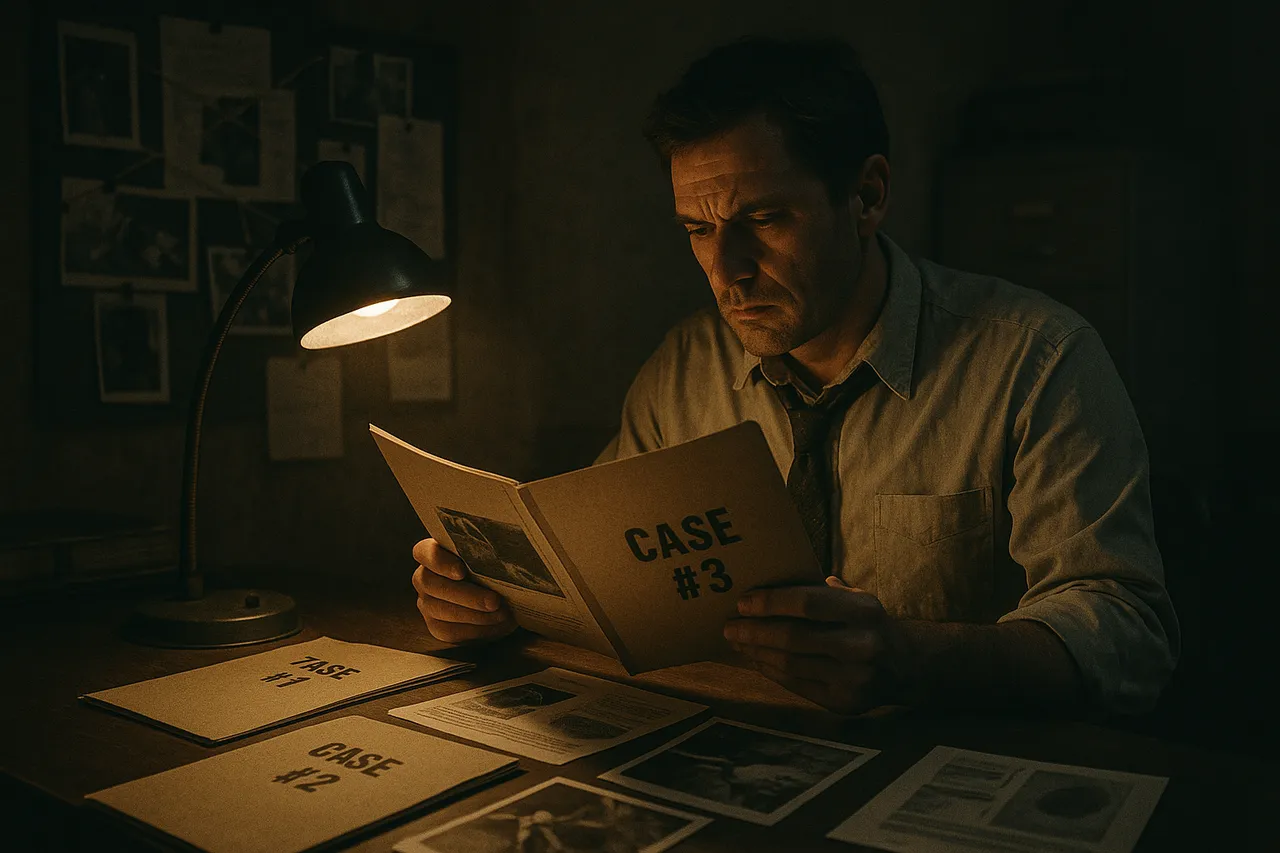
What's New on CrimeFile: Episodes, Tools, and the Road Ahead
Three New Cases
CrimeFile now offers episodes 48, 49, and 50. Episode 48 follows a 1982 Stockholm murder tied to Cold War espionage networks. Episode 49 dramatises a rural Australian disappearance from 1976, centred on witness inconsistencies and forensic soil analysis. Episode 50 reconstructs a London jewellery heist from 1968, exploring getaway logistics and fence networks.
All three cases involve real investigative techniques from their respective periods. Players access archival documents, interview transcripts, and period-appropriate forensic reports. The gameplay loop remains unchanged: examine evidence, form hypotheses, submit conclusions.
Evidence Viewer Rebuilt

The platform's document interface has been rewritten. Previously, users navigated evidence through nested folders and pagination controls. The new viewer organises material by type — photographs, witness statements, lab reports, maps — and surfaces contextual metadata without leaving the reading pane.
Search now parses handwritten text in scanned documents. A filter bar lets investigators isolate evidence by date, location, or relevance score. The change reduces the friction between reading a report and cross-referencing it against testimony.
Performance improved on mobile devices. Load times for high-resolution crime scene photographs dropped by roughly 60 percent. The viewer no longer requires horizontal scrolling on narrow screens.
Collaborative Mode in Development
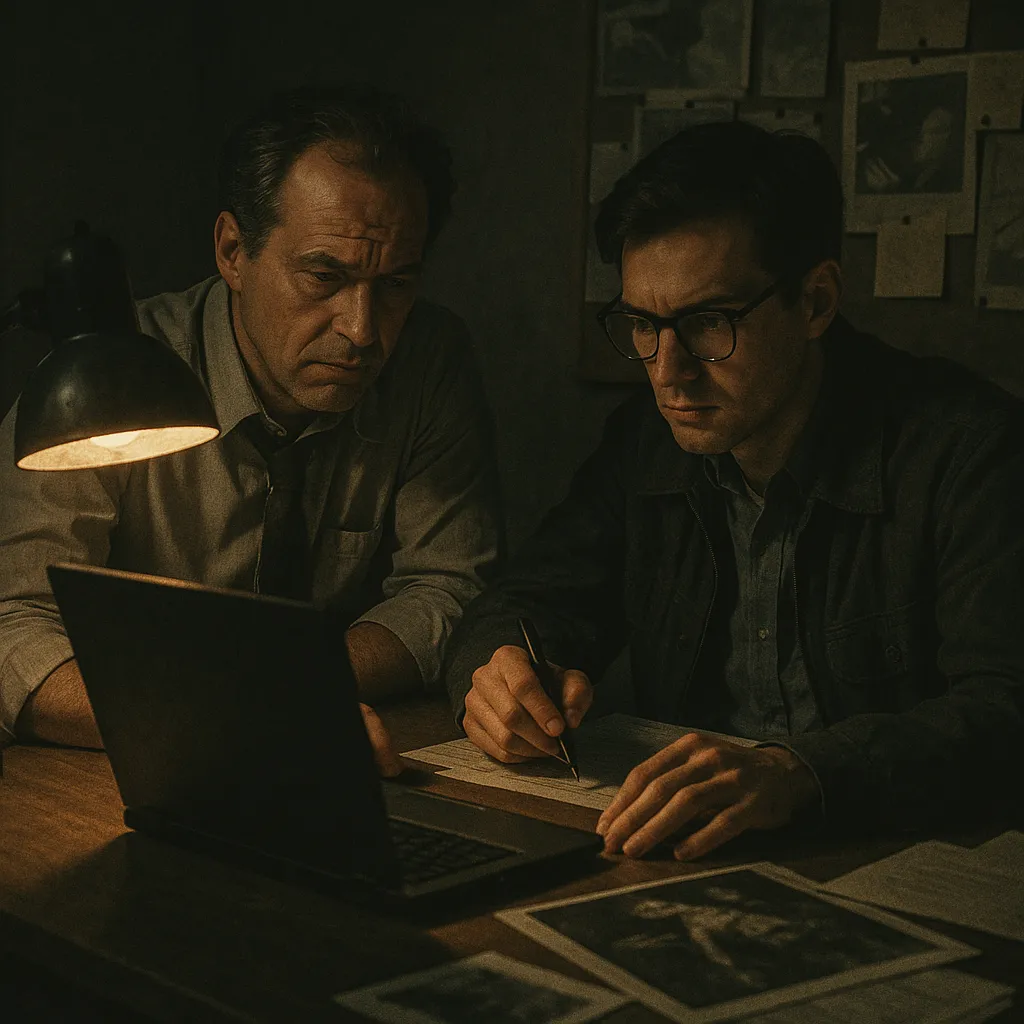
Work has started on multi-player investigations. The feature will allow two to four players to share case access, annotate evidence collaboratively, and compare deduction paths. Implementation is scheduled for early 2025.
The design treats each player as an independent investigator. Annotations remain private until a player chooses to share them. A session timeline tracks who examined which documents and when. At the conclusion, the system generates a comparison matrix showing where players' theories converged or diverged.
No competitive scoring. The goal is to simulate the way real investigative teams work: parallel inquiry, peer review, collective synthesis.
What's Still Missing
The platform lacks audio integration. Witness interviews exist only as transcripts. Adding voice recordings — whether dramatised or AI-generated — is under consideration but not yet prioritised.
The onboarding experience remains dense. New users face a steep learning curve. Simplified tutorial cases are in discussion.
Archival depth varies by episode. Some cases include dozens of documents; others offer fewer than ten. Expanding evidence sets for older episodes is ongoing but resource-intensive.
Why This Matters
True-crime games occupy an uncomfortable niche. Many exploit tragedy for spectacle. Others reduce investigation to mechanical puzzle-solving. CrimeFile attempts a different approach: treat real cases as intellectual and moral exercises, grounded in historical fact and investigative rigour.
The platform's value lies in what it refuses to do. It does not dramatise violence. It does not invent evidence. It does not reward players for speed or correct guesses. Instead, it asks: can you think like a detective? Can you weigh conflicting testimony, identify gaps in forensic logic, and construct a defensible narrative from incomplete data?
The new episodes, the rebuilt viewer, and the forthcoming collaborative mode all serve that question. They are tools for deeper engagement with the material, not distractions from it.
Next Steps
Episode 51 is scheduled for late December. It will cover a 1970s Parisian art forgery ring with connections to Interpol investigations. Episode 52, planned for January, focuses on a 1984 Glasgow cold case recently reopened using forensic genealogy.
The roadmap includes improved mobile navigation, expanded archival photography, and a case difficulty rating system. No release dates yet.
The platform remains ad-free. Funding comes from episode purchases and annual memberships. That model will continue.