
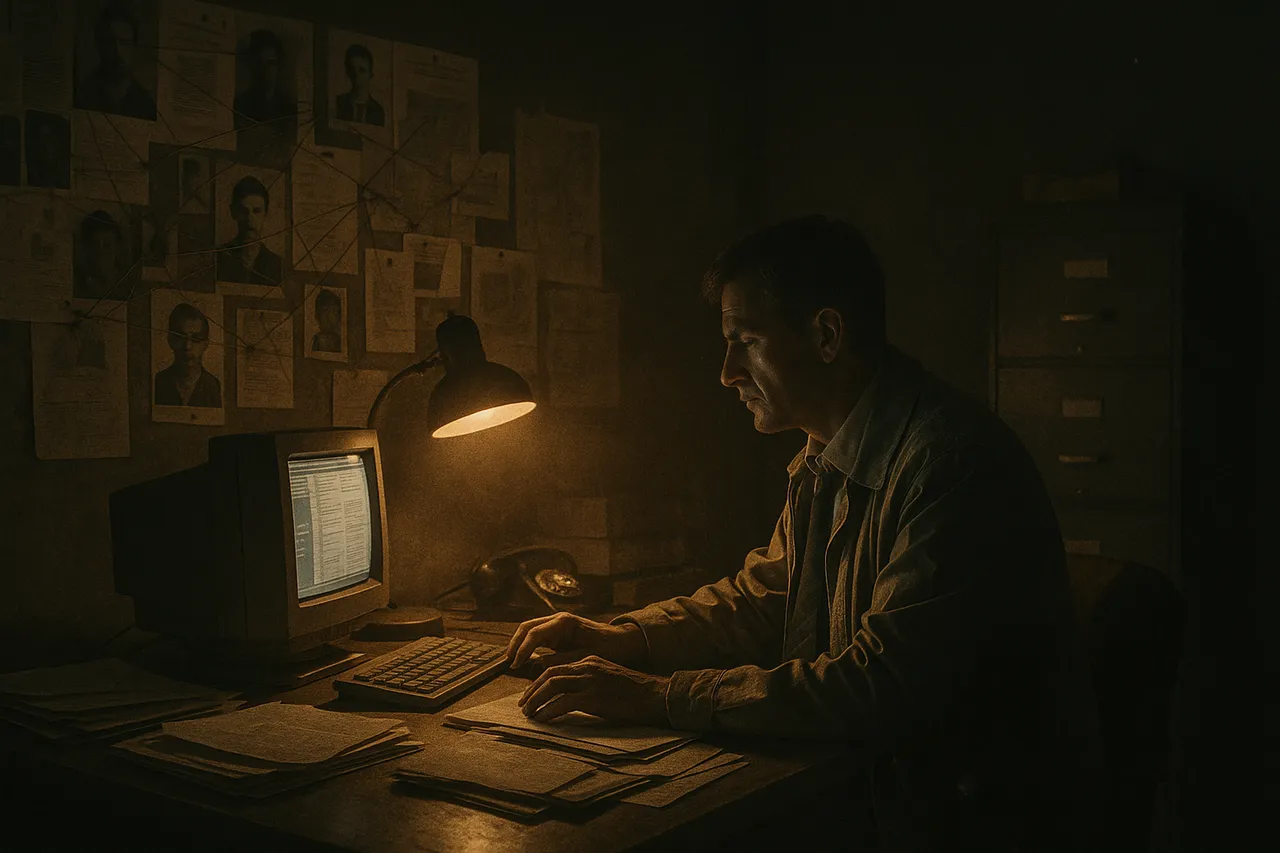
CrimeFile Expands to Four Languages: True Crime Goes Global
From English-Only to a Multilingual Investigation Platform
CrimeFile began as an English-language detective game platform in 2023, offering players the chance to solve historical cold cases using real investigative techniques. As of December 2024, the platform operates in four languages: English, Russian, Spanish, and Brazilian Portuguese. This expansion reflects both user demand and the global nature of true-crime storytelling.
The decision to expand beyond English was driven by community feedback. More than 40% of early beta testers accessed the platform from non-English-speaking regions, particularly Eastern Europe and Latin America. Players in Moscow, São Paulo, and Madrid requested localised content—not merely translated text, but cases and references that resonated with their own investigative traditions and cultural contexts.
Why These Four Languages?

The choice of English, Russian, Spanish, and Portuguese was deliberate. English remains the dominant language for true-crime media worldwide, from podcasts to documentary series. Russian true-crime audiences have long engaged with domestic cases—the Soviet-era investigations, the serial crimes of the 1980s and 1990s, and contemporary forensic work by agencies like the Investigative Committee of Russia.
Spanish and Portuguese unlock access to Latin America and the Iberian Peninsula. Spain's Guardia Civil and Brazil's Polícia Federal have both published detailed case files on historical investigations, from the Alcàsser murders (1992) to the disappearance of Elisa Samudio (2010). These cases carry cultural weight in their regions but rarely appear in English-language true-crime platforms.
Multilingual platforms also allow for richer narrative design. A case set in 1970s Leningrad can be told with period-appropriate Soviet investigative language in Russian, while an English version might emphasise Cold War context for international players. Each language version is written natively, not machine-translated.
Technical Architecture: How Localisation Works
CrimeFile's localisation is built on a translation key system rather than static content duplication. Every piece of text—from case briefings to forensic reports—is stored as a key-value pair in JSON files. When a player selects a language, the game engine loads the corresponding translation.
This architecture has two advantages. First, it ensures consistency: a single source of truth for each narrative element. Second, it allows incremental updates. If a new episode launches in English, Russian, Spanish, and Portuguese versions can be added independently as native writers complete them.
The platform does not use machine translation for core content. Each case is written or adapted by native speakers with subject-matter expertise. A Brazilian Portuguese case about São Paulo's forensic institute is authored by someone familiar with Brazilian legal terminology and police procedure. A Russian case referencing the USSR's MVD (Ministry of Internal Affairs) is written by someone who understands Soviet bureaucratic language.
Case Studies: Multilingual Investigations
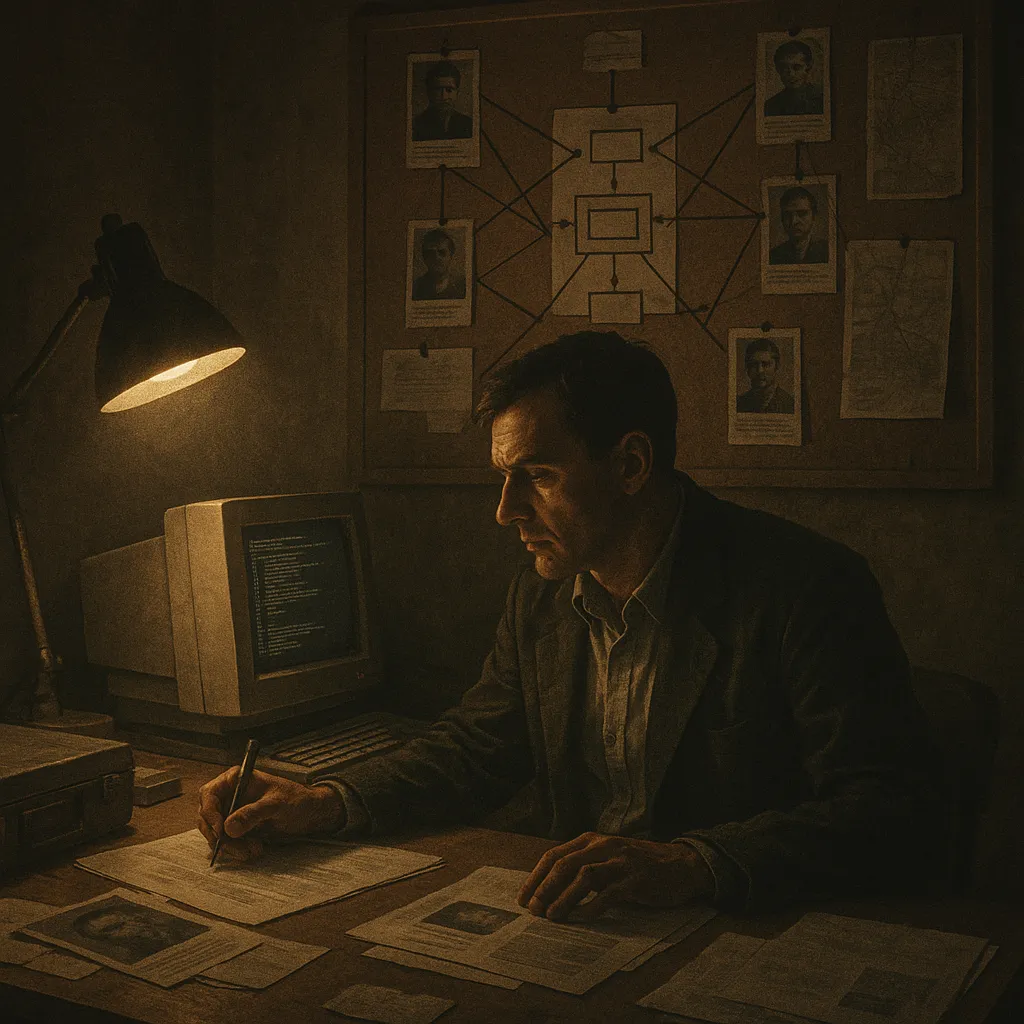
Episode 23: The Baltic Amber Mystery
This case, set in 1978 Kaliningrad (then Königsberg, USSR), investigates the smuggling of Soviet amber through clandestine networks. The Russian version uses authentic Soviet-era police jargon—terms like "оперативная разработка" (operational development) and references to the KGB's role in economic crimes.
The English version provides Cold War context for Western players unfamiliar with Soviet administrative geography. The Spanish and Portuguese versions draw parallels to Latin American contraband networks of the same era, making the investigation culturally accessible without distorting the historical record.
Episode 37: The Lisbon Vanishing, 1981
A Portuguese case involving the disappearance of a university student during Portugal's post-dictatorship transition. The Portuguese version references the Polícia Judiciária (PJ) and the political climate following the Carnation Revolution. The Spanish version includes footnotes on Iberian investigative cooperation. The English and Russian versions situate the case within broader European detective history, citing comparable disappearances in France and the USSR.
Each version is an independent editorial work, optimised for its audience's cultural and investigative literacy.
Search Optimisation Across Languages
Multilingual SEO requires more than translated keywords. Russian speakers searching Yandex use different query patterns than English speakers on Google. A Russian user might search "нераскрытые убийства СССР" (unsolved murders USSR), while an English user searches "Soviet cold cases 1970s."
CrimeFile's Russian blog targets high-volume Yandex queries related to Soviet-era crime, forensic history, and famous investigators like Viktor Burakov (who tracked Andrei Chikatilo). The Spanish blog covers cases from the Transition period in Spain, the "años de plomo" in Argentina, and Mexican forensic anthropology. The Portuguese blog focuses on Brazilian true crime, particularly cases handled by the Polícia Civil in Rio de Janeiro and São Paulo.
Each language's editorial content is researched and written independently, ensuring that SEO value is native, not derivative.
The Role of Community Feedback
CrimeFile's multilingual expansion was shaped by player input. Beta testers from Argentina requested cases involving South American forensic archaeology. Russian players asked for more Soviet-era investigations, particularly those involving closed archival materials now accessible under declassification laws. Spanish players requested cases from the Basque Country and Catalonia, where regional investigative traditions differ from Madrid-centric narratives.
This feedback loop is ongoing. The platform's roadmap includes cases from Mexico (narco-related forensic work), Portugal (Estado Novo-era disappearances), and post-Soviet Central Asia.
Challenges of Multilingual True-Crime Content
Localisation is not without difficulty. Legal terminology varies even within the same language. Brazilian Portuguese legal terms differ from those used in Portugal. Peninsular Spanish and Latin American Spanish diverge in forensic vocabulary. Russian spoken in Moscow differs from Russian spoken in Kazakhstan or Ukraine, particularly in post-Soviet investigative contexts.
CrimeFile addresses this by employing regional experts for each language variant. The Brazilian Portuguese team includes a former crime reporter from O Globo. The Russian team consults with legal historians familiar with Soviet criminal procedure codes. The Spanish team includes contributors from both Spain and Argentina, ensuring terminology is either universally understood or explicitly footnoted.
Another challenge is historical sensitivity. Cases involving state violence, political repression, or ethnic conflict require careful framing. A case from Franco-era Spain must acknowledge the dictatorship's suppression of investigative transparency. A Soviet case must note the MVD's politicised role in certain investigations. Each language version handles these contexts with appropriate nuance.
What This Means for True-Crime Storytelling
The multilingual expansion of CrimeFile reflects a broader shift in true-crime media. The genre is no longer dominated by Anglophone narratives. Podcasts like "Caso 63" (Spanish-language, distributed across Latin America) and "Все говорят" (Russian, covering post-Soviet crime) attract millions of listeners. Documentary series from Brazil, Argentina, and Spain appear on global streaming platforms.
Interactive detective platforms like CrimeFile extend this trend. By offering cases in multiple languages, the platform allows players to engage with investigative traditions outside their own. A Spanish player can explore Soviet MVD case files. A Russian player can examine Brazilian forensic anthropology. An English-speaking player in Toronto can investigate a 1980s disappearance in Lisbon.
This cross-pollination enriches the genre. It moves true-crime storytelling away from sensationalism and toward a more globally informed, historically grounded approach.
Future Language Additions
The platform's technical infrastructure supports further expansion. German and French are under consideration, given the volume of historical cold cases in both countries. German players have requested cases involving the Bundeskriminalamt (BKA) and East German Stasi investigations. French players have asked for cases from the Police Judiciaire, particularly those involving forensic pioneers like Edmond Locard.
Italian is another candidate, given Italy's extensive true-crime legacy—from the Monster of Florence (1968–1985) to the work of RIS Carabinieri (scientific investigation). Polish is also discussed, particularly for cases involving wartime and post-war investigations.
Each new language requires native editorial teams, SEO research, and cultural consultation. The goal is not scale for its own sake, but depth: each language should offer content that could not exist in any other.
Conclusion: Investigation Without Borders
CrimeFile's expansion to English, Russian, Spanish, and Portuguese represents a commitment to global true-crime storytelling. By offering natively written cases, culturally grounded narratives, and SEO-optimised editorial content in each language, the platform serves investigators worldwide.
The work of detection—examining evidence, testing theories, reconstructing timelines—is universal. The languages, legal systems, and cultural contexts through which that work happens are not. A multilingual platform honours both the universality of investigative logic and the specificity of place, time, and jurisdiction.
For players, this means access to cases they would never encounter in English-only media. For the true-crime genre, it means a more accurate, more global, and more historically rigorous approach to storytelling.